Design Courier

HOME   |

Into big AFFAIRS

Astral Weeks: Building Value Through Culture

For New York developers Raymond and Joseph Roubeni, the brothers behind Astral Weeks, real estate is about more than delivering buildings. By treating culture as social infrastructure and neighbourhood engagement as part of the development process, they are exploring how authentic experiences can shape a property's identity, inform investment decisions and create lasting commercial value.

cover-restaurant.png

Founded in 2001 as a family business, Astral Weeks is a privately held real estate development and management company focused on uniquely positioned assets and dynamic neighbourhoods. Its portfolio spans residential, commercial, hospitality, student housing and mixed-use projects, with an integrated approach that brings together investment, architecture, construction, branding and property management. As owner, operator and manager, the company combines strategic vision with hands-on execution, seeking opportunities where a property's potential extends beyond its physical boundaries.

Courtesy of Franklin Point

For Raymond and Joseph Roubeni, that potential begins with the relationship between a building and the neighbourhood around it. Dropping a sterile, passive structure into an established cultural ecosystem, they argue, is a missed opportunity. Instead, they see cultural programming not as an additional amenity, but as a development strategy: a way to create reasons for people to gather, build lasting connections and establish a property's relevance within its surroundings.

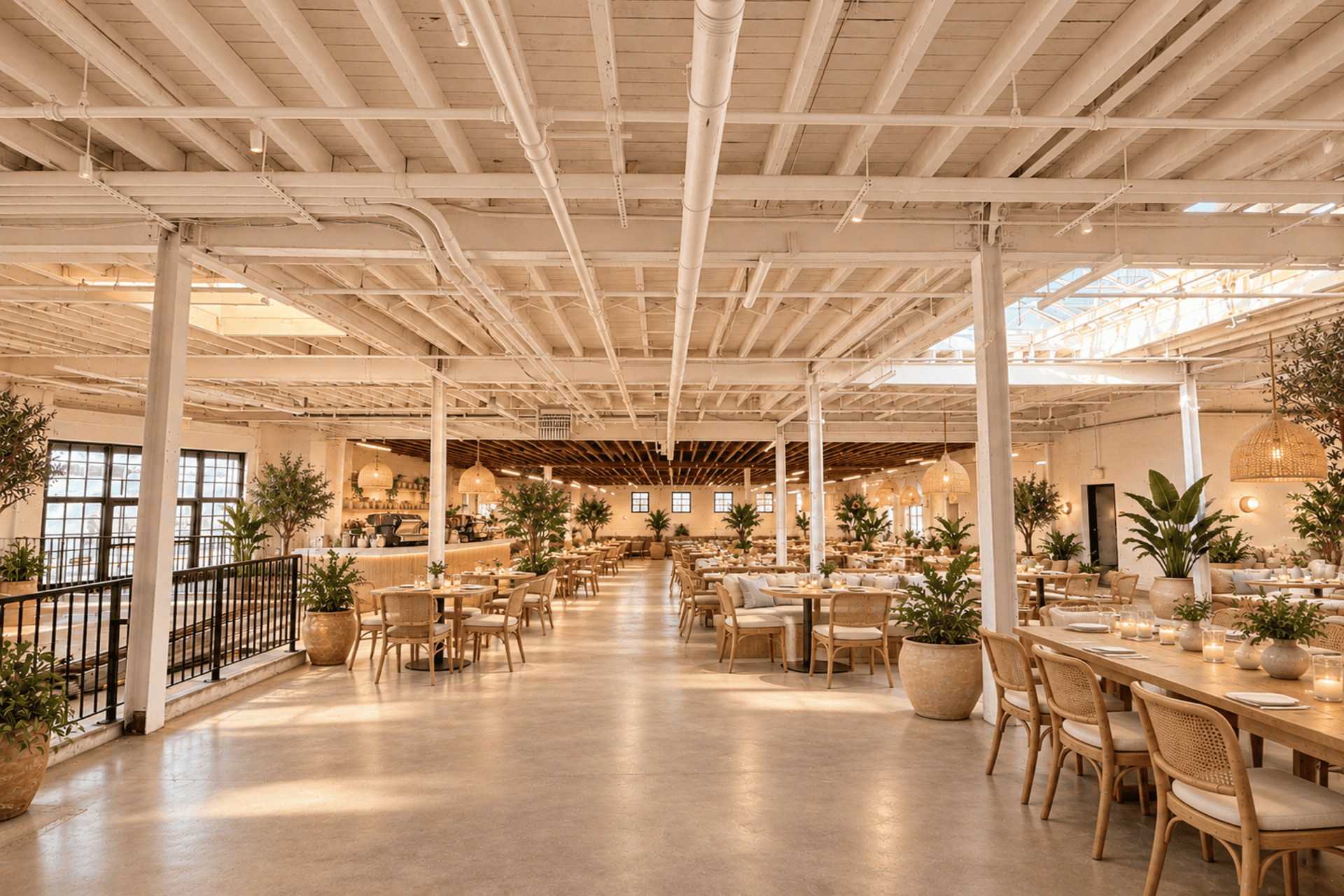
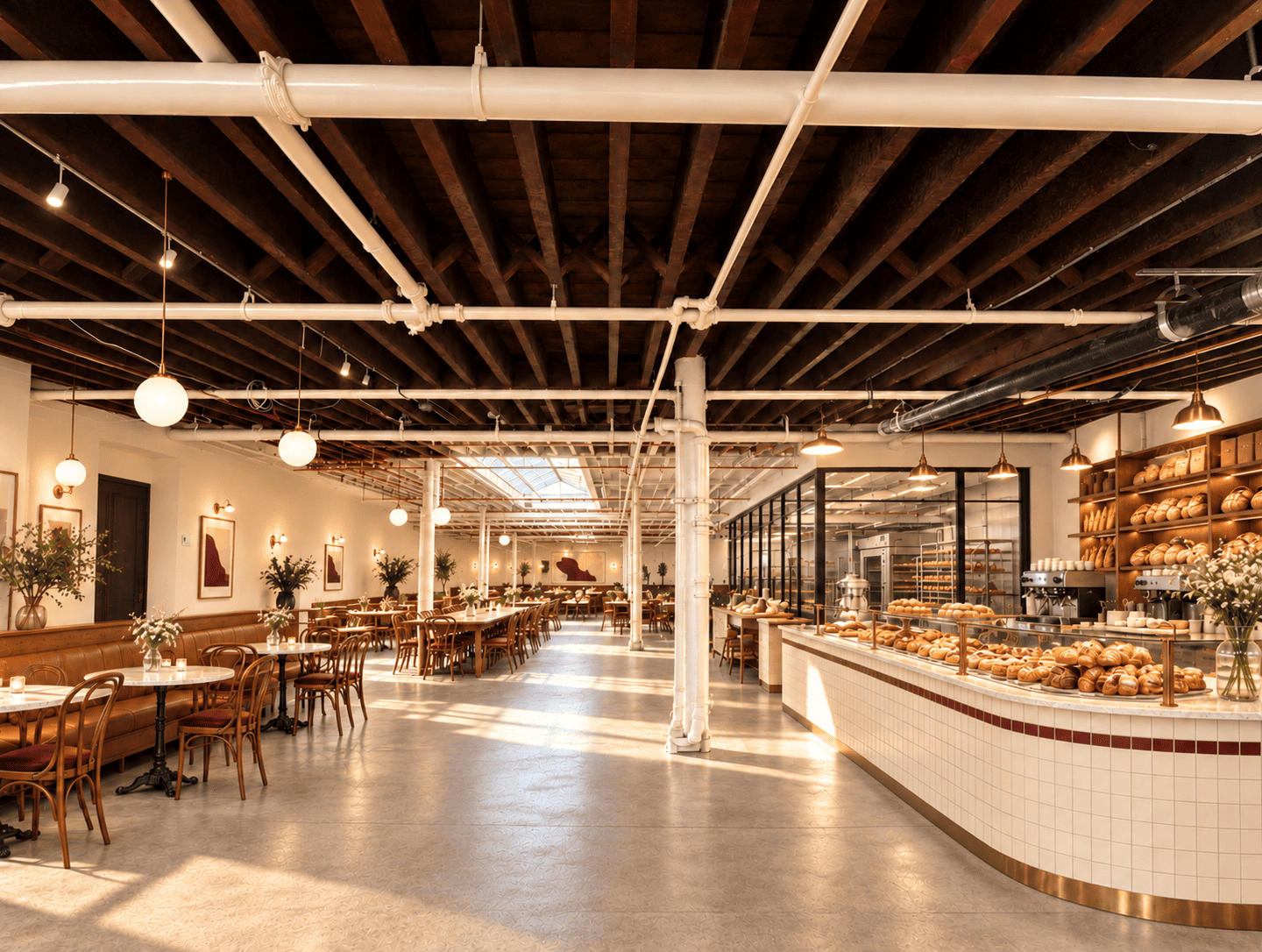
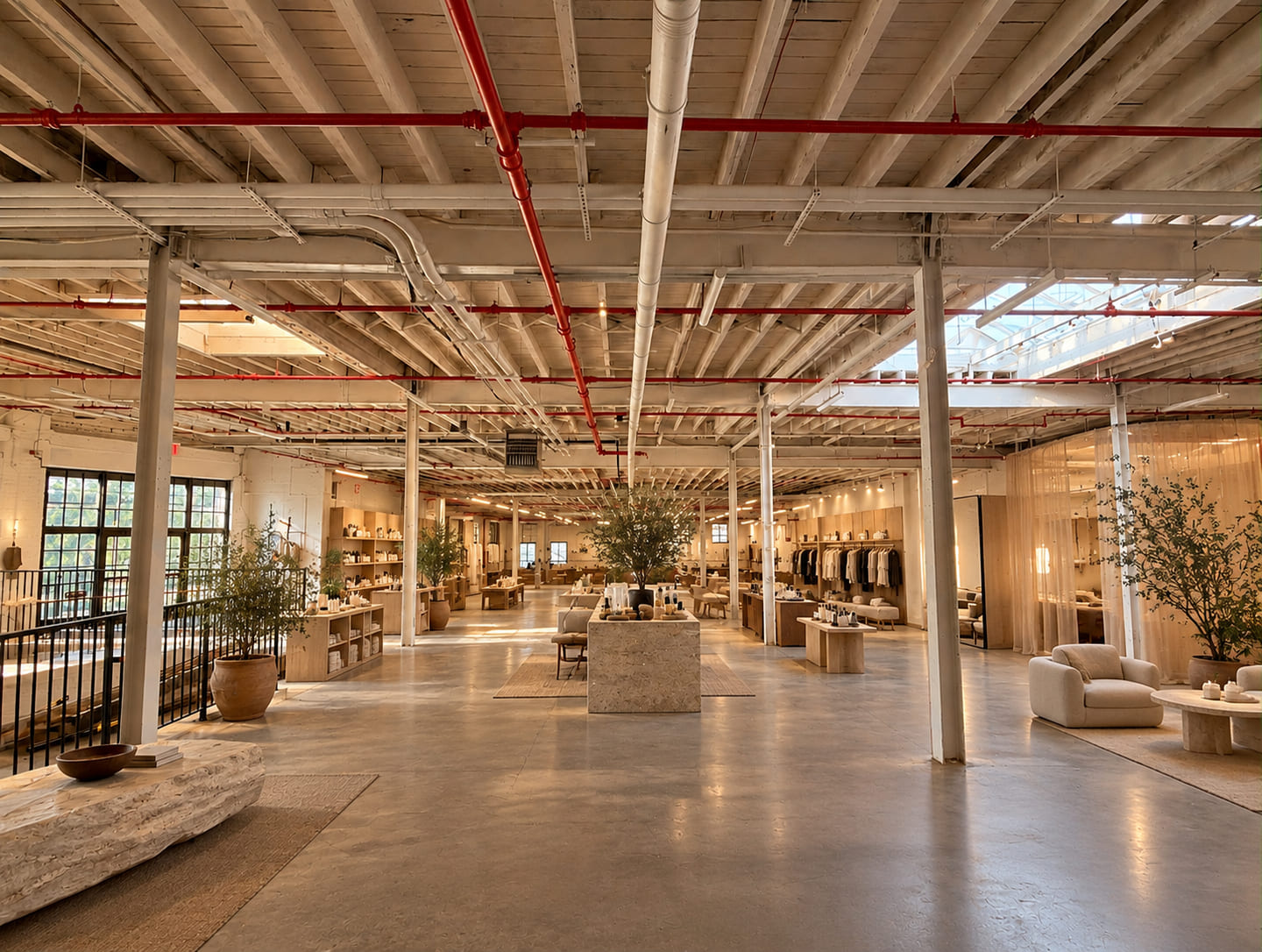
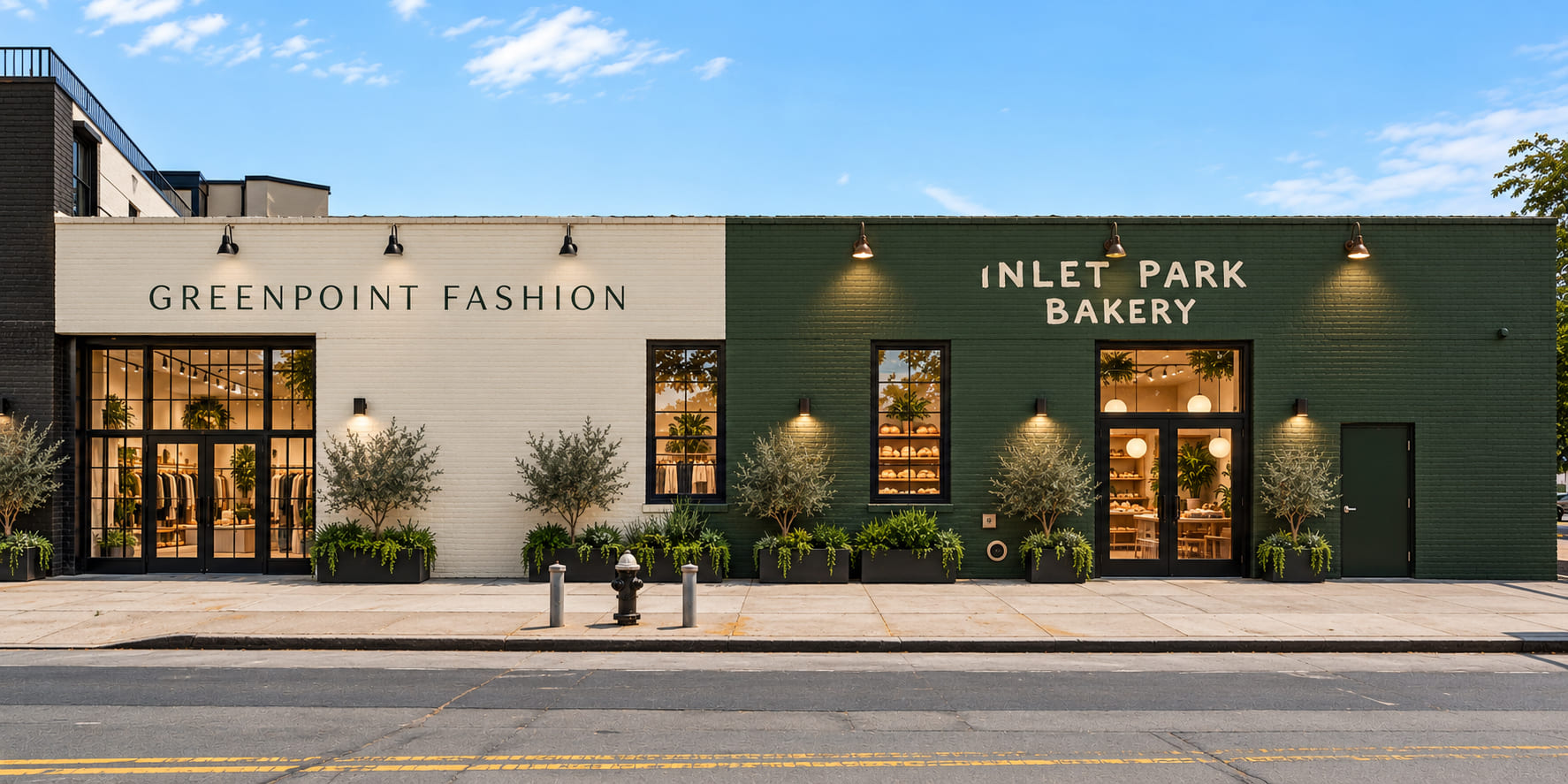
Their approach is taking shape at Franklin Point, a 30,000-square-foot industrial waterfront property in Greenpoint, Brooklyn. Rather than leave the space vacant while pursuing permanent retail tenants, Astral Weeks is testing its potential through temporary, experience-led programming, including a World Cup viewing village developed in partnership with Zum Schneider, the established New York beer hall known for its German hospitality and cultural roots. The initiative turns an unfinished industrial setting into a destination while allowing the developers to observe how visitors use the space, how operators respond to its constraints and which activities might support its long-term future.

The strategy is both cultural and commercial. By bringing an established hospitality operator into the project, Astral Weeks can activate the site, engage the local community and gather real-world evidence before committing to a permanent use. It also raises broader questions about the role of developers in shaping neighbourhoods, the difference between authentic placemaking and asset marketing, and the challenge of measuring cultural relevance in conventional real estate terms.

In this conversation, Raymond and Joseph Roubeni discuss how culture can function as infrastructure, why local knowledge matters as much as architectural execution, and how live experimentation can help developers make more informed decisions while preserving the character of the places they transform.

Courtesy of Franklin Point

You treat cultural programming as a development strategy rather than an amenity. What made you see culture as a form of infrastructure – and a driver of real estate value?

Raymond Roubeni: What changed my thinking was the distinction between creating space and creating a reason to be there. Real estate tends to invest heavily in the first and assume the second will follow. We don't make that assumption.

We think of culture as social infrastructure: the relationships, rituals and shared experiences that make a place part of people's lives. A gym is something a building has. A cultural identity is something people participate in and, over time, feel a genuine connection with.

That changes how we develop. Programming isn't a finishing touch after the architecture and leasing strategy are settled; it helps inform both. The value isn't simply the crowd an event attracts. It's whether that experience gives people a reason to return, brings operators into the conversation and establishes a meaningful role for the property in the neighbourhood.

What does a developer risk missing when a building is conceived as an isolated asset rather than as part of an existing neighbourhood and its cultural ecosystem?

Joseph Roubeni: You risk misunderstanding what you're actually buying or building. The property line defines your ownership, but it doesn't define the forces that make the property valuable.

A neighbourhood has its own rhythms, relationships, businesses and ways of gathering. If you underwrite the building without understanding those dynamics, you can create something technically well executed but fundamentally out of place.

We approach the neighbourhood as a source of intelligence, not just a demographic profile. What is already working? What is missing? Who has earned people's trust? The opportunity is not to import an identity into a blank space. It is to create something distinctive that belongs there, something that gives the existing ecosystem more room to thrive.


Courtesy of Franklin Point

At Franklin Point, you are effectively testing the site's potential through a live World Cup viewing village. What can real-world behaviour reveal that a conventional feasibility study cannot?

Raymond Roubeni: A feasibility study helps you frame a hypothesis. A live activation lets people challenge it. At Franklin Point, our World Cup and Oktoberfest programming allows us to observe how people actually use the space: where they gather, how they move, how long they stay and what brings them back. We can also see where the physical layout supports the experience and where it creates friction for guests or operators.

The distinction is that we're not treating temporary programming as a placeholder for development. We're treating it as part of the development process. Before we lock in a long-term plan, we can learn which uses deserve a permanent home, which assumptions need to change, and where flexibility is more valuable than a predetermined design. A successful event is encouraging; the more important outcome is a better-informed investment decision.

Why was working with a legacy operator like Zum Schneider more valuable than creating a new, developer-led experience from scratch?

Joseph Roubeni: We don't believe the developer needs to be the author of everything. Sometimes our most valuable contribution is recognising who has already created something meaningful and giving them the space and support to do it well.

Zum Schneider brings an established identity, operating experience and relationships that a newly invented concept would have to earn. Our German heritage makes the partnership personally meaningful, but it also reinforces our respect for the details that distinguish a genuine cultural experience from a themed event.

Working with Sylvester Schneider and his team allows us to focus on what we can contribute: the setting, infrastructure and development perspective. They bring the hospitality and cultural knowledge. The objective isn't to put our stamp on their identity. It's to create the conditions in which that identity can thrive.

“Placemaking” has become a ubiquitous real estate term. How do you distinguish genuine cultural contribution from an experience that is simply designed to market an asset?

Raymond Roubeni: The test is whether the experience matters to people beyond what it says about the property.

Branding can communicate a place's identity, but it cannot substitute for one. Genuine cultural contribution gives people something they value: a gathering place, a tradition, a platform for local talent or an experience they want to repeat. It has a purpose beyond producing attention.

We ask whether people would miss it if it disappeared. We also ask who helps shape it and who benefits from it. Something can be visually compelling and commercially successful while still making a genuine contribution. The distinction is whether the neighbourhood is a participant in the experience or merely an audience for the developer's message.

Courtesy of Franklin Point

How can developers unlock the potential of historic industrial spaces like those in Greenpoint without erasing the cultural identity that made the neighbourhood valuable in the first place?

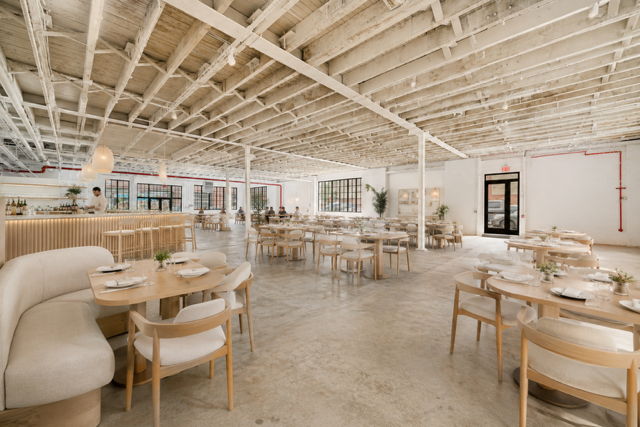
Raymond Roubeni: There's an appeal to old industrial buildings that new construction can't simply reproduce: the generous proportions, raw materials and traces of working life. Those qualities give a place depth. At Franklin Point, we see that heritage not as something to overcome, but as the starting point for what makes the property compelling.

The objective of adaptive reuse is to bridge that past to relevance today. It isn't about freezing a building in time or turning its history into a decorative theme. It's about understanding what makes the space distinctive and introducing uses that give those qualities renewed purpose. Spaces once built for production can become places for gathering, hospitality and shared cultural experiences, while retaining the character that makes them worth coming to.

For us, success means the building's history remains legible, but its future feels alive. We want to preserve more than the appearance of an industrial past; we want to carry its energy into a new chapter of neighbourhood life.

Courtesy of Franklin Point

How do you quantify the commercial value of community, cultural relevance and experience – qualities that rarely appear in conventional real estate metrics?

Joseph Roubeni: We don't try to assign a dollar value to “authenticity”. We look for evidence that cultural relevance changes how the property performs.

That means tracking repeat visits, dwell time, spending, operating costs and the economics of the programming itself. On the real estate side, we look at qualified tenant interest, leasing conversion, tenant retention and whether operators see the location as an established destination rather than an untested address.

The discipline is connecting those observations to underwriting without overstating them. A large crowd does not automatically justify a rent premium, and a successful weekend does not prove year-round demand. Cultural programming becomes commercially valuable when it helps us make better decisions, supports durable tenant economics and reduces uncertainty around the property's long-term use.

What responsibility should a developer have for the life of a neighbourhood beyond delivering the building itself?

Raymond Roubeni: A developer should take responsibility for how a project functions in the neighbourhood, not just how it performs at completion. We make decisions that influence who can operate in a place, who feels welcome and which activities can survive there. That responsibility extends to tenant selection, management, programming and the everyday relationship between the property and its surroundings.

But stewardship also requires humility. We are not there to manufacture a community or appoint ourselves its cultural authority. Our role is to listen, make room for people who already contribute and structure the project so those contributions have a durable place. The ambition is to create an asset that succeeds because it is embedded in and adds to the neighbourhood.

The interview has been edited and condensed for clarity.
Magazine Design Courier

Get Design Courier straight to your inbox

The community magazine for the community
Powered by Medelhan - The Global Design Network

The community magazine for the community
Powered by Medelhan - The Global Design Network
© Design Courier. Powered by Medelhan. Developed by Broadweb.80
The community magazine for the community
Powered by Medelhan - The Global Design Network
The community magazine for the community
Powered by Medelhan - The Global Design Network

Get Design Courier straight to your inbox

© Design Courier. Powered by Medelhan. Developed by Broadweb.80