

The community magazine for the community
Powered by 
The community magazine for the community
Powered by
© Design Courier. Powered by Medelhan. Developed by Broadweb.80
| CANVAS OF PLANS & DRAWINGS |
INTERIOR & DÉCOR, but with a twist |
| HOTELS & RESTAURANTS, beyond mainstream |
Notes on ART |
| Into big AFFAIRS | INSIDERS |
| GLIMPSES | |
Keywords:
The broader story begins in the early 19th century, when Aurora’s fortunes were closely tied to the Erie Canal and the movement of goods toward New York City. The Aurora Inn, built in 1833, evolved alongside these shifts – from traveler’s stop to student housing, and eventually into the anchor of what is now a carefully orchestrated hospitality destination. Today, the Inns of Aurora presents itself as both retreat and cultural artifact, where historical character is not merely displayed but reinterpreted through contemporary design.
Within this context, the Farmhouse occupies a particularly significant role. Originally constructed in 1835 as the center of a 140-acre working farm, the red-brick Greek Revival home remained, until recently, one of the last major historic structures in the village left unrestored. Its revival completes a long arc of preservation while simultaneously expanding the resort’s spatial and experiential boundaries. No longer confined to Main Street, the Inns now extends into the surrounding landscape, reshaping how guests encounter the property.
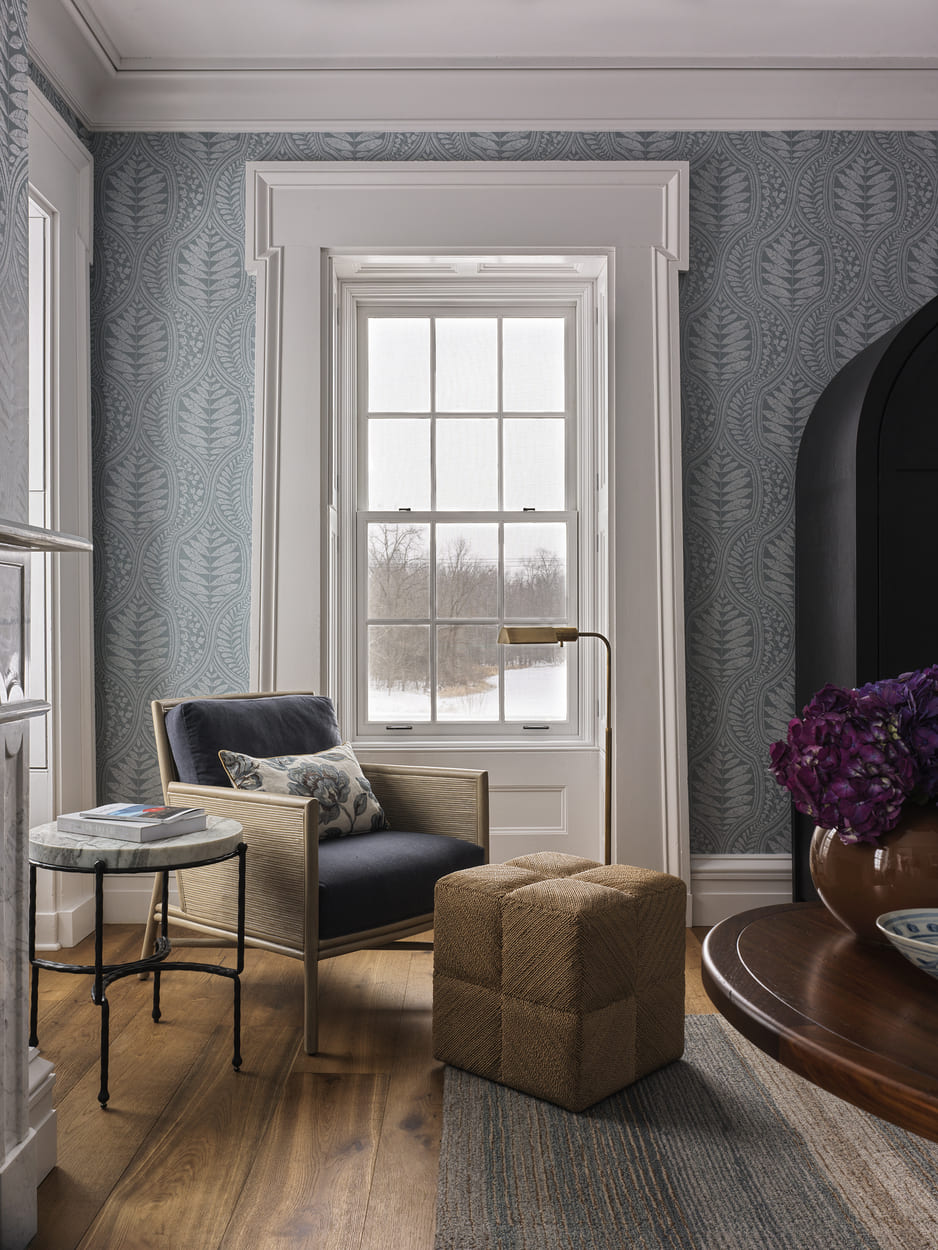
Balancing the Farmhouse’s 19th-century identity with a distinctly contemporary addition required a measured, almost restrained approach. As Teddy McCarthy, Partner at Hart Howerton, explains, “From the outset, our ambition was to preserve the character of the 1835 Farmhouse while introducing a contemporary addition that could broaden the guest experience. We restored much of the home’s original exterior brickwork, select millwork, and defining architectural elements while also retaining the original layout. At the same time, we introduced a contemporary language in the new wing using simple gabled forms and expansive windows. By connecting the historic home with the new Meadow Studios through light filled galleries, we allowed the old and the new to work together while retaining the original Farmhouse.”
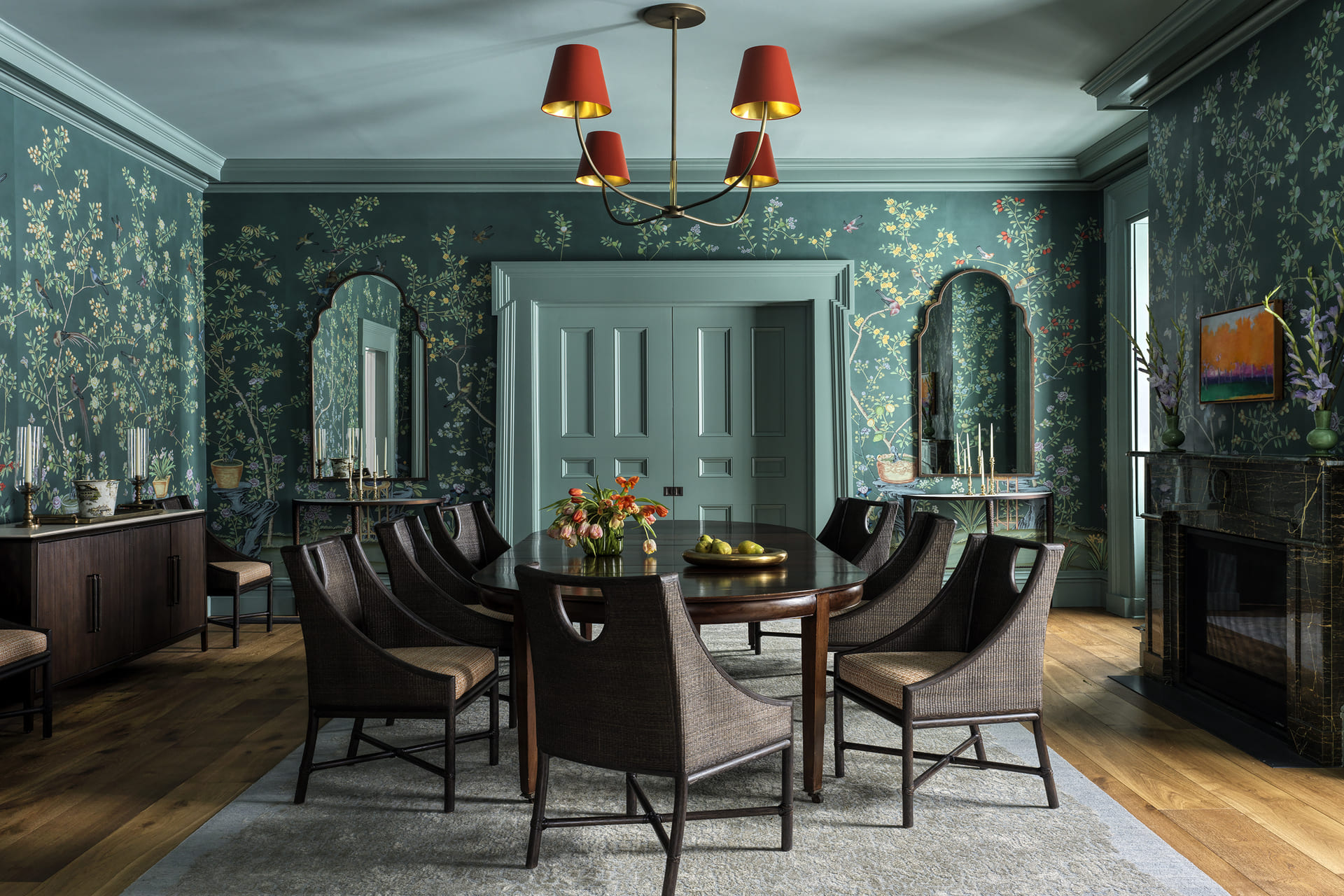
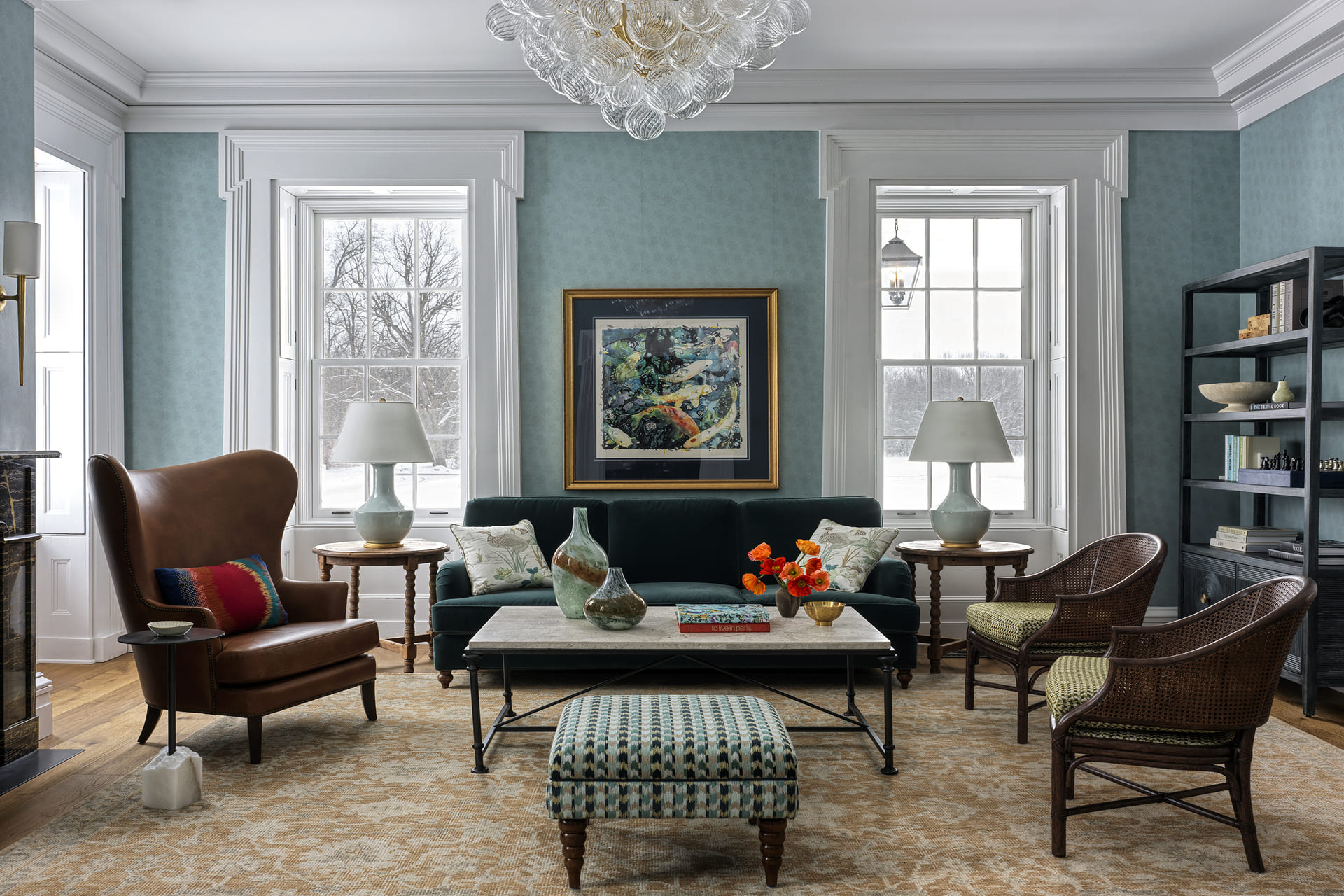
That balance is immediately legible in the architecture. The restored structure leans into its material and spatial inheritance: repointed brickwork, a reinstated columned porch, and interiors that maintain their original configuration. The front rooms – parlors, dining space, and study – retain a sense of enclosure and weight, enriched by layered colors, custom wall coverings, and an extensive collection of American art. Rather than diluting the historic atmosphere, the design amplifies it, allowing these spaces to feel intimate and contemplative.
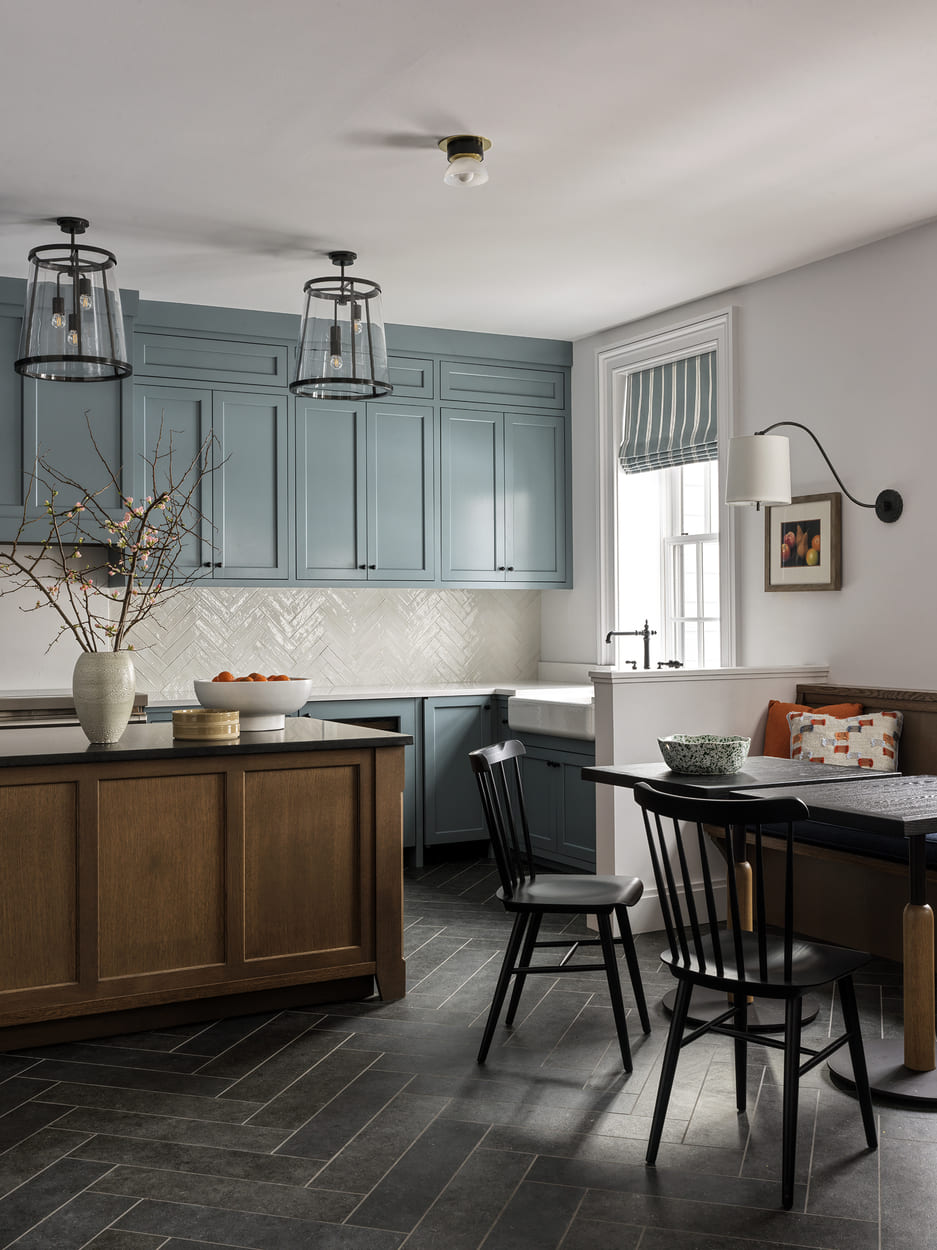
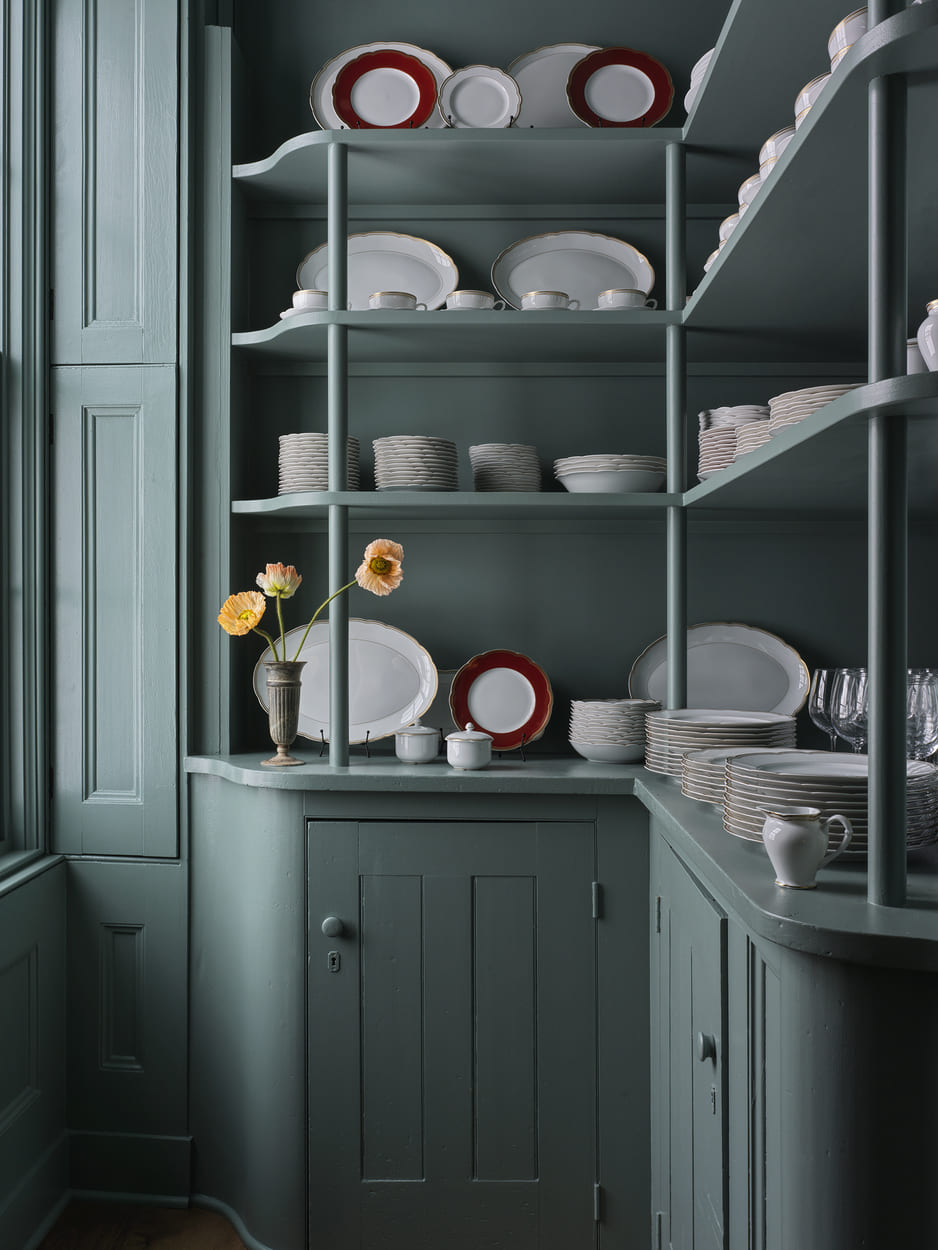
The upper floors extend this sensibility into the guest suites, where preserved millwork and carefully scaled proportions are paired with contemporary comforts. The effect is not nostalgic but grounded – luxury defined through material quality and spatial clarity rather than ornament or excess.
The transition to the new wing introduces a deliberate shift in tone. Conceived as a series of Meadow Studios, the addition adopts a pared-back architectural language drawn from regional agricultural forms. Simple gabled volumes, painted brick, and standing-seam metal reference the barns and outbuildings of the Finger Lakes, yet are reinterpreted with a contemporary precision. Large windows open outward toward Cayuga Lake and the surrounding landscape, transforming views into a central design element.
The movement between these two worlds is orchestrated through a sequence of light-filled galleries. McCarthy describes them as an opportunity to shape perception as much as circulation: “Connecting the historic Farmhouse to the contemporary wing became an opportunity to shape how guests move through the property. We designed the galleries to maximize natural light and framed views to nature and the adjacent Spa, while subtle shifts in material signal the transition from the historic structure to the new spaces.” These transitional spaces function as narrative devices, marking a gradual shift from density to openness, from introspection to outward engagement.
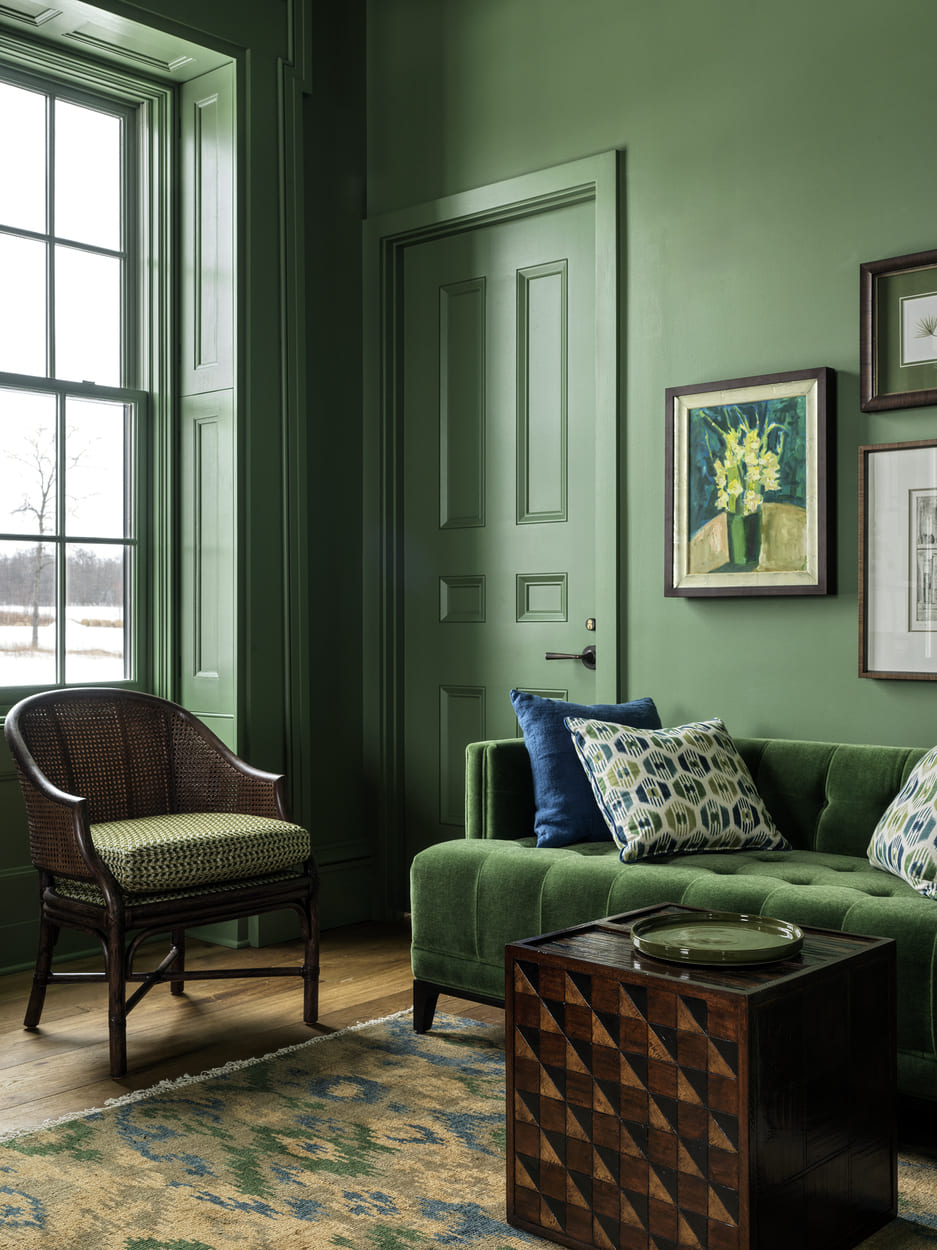
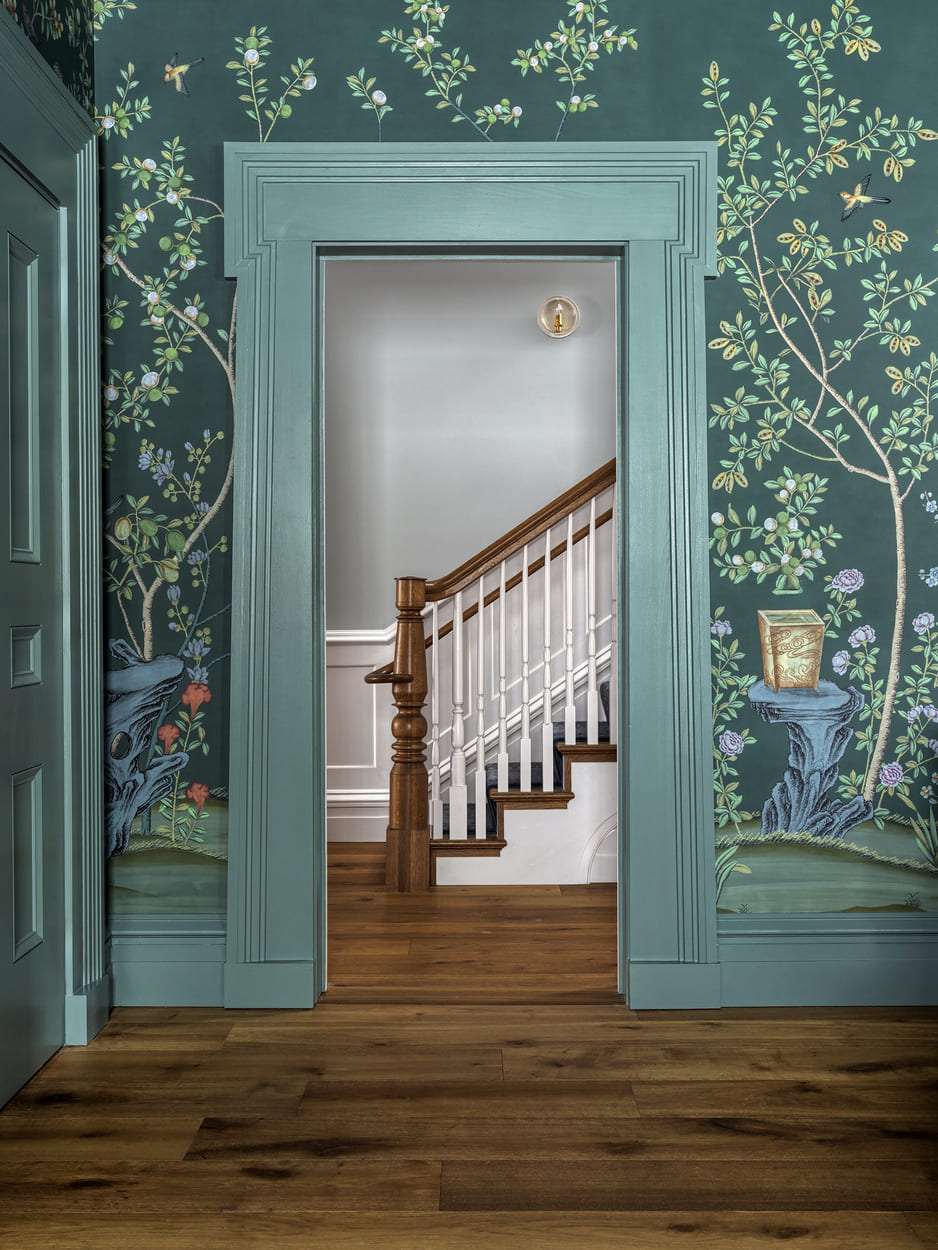
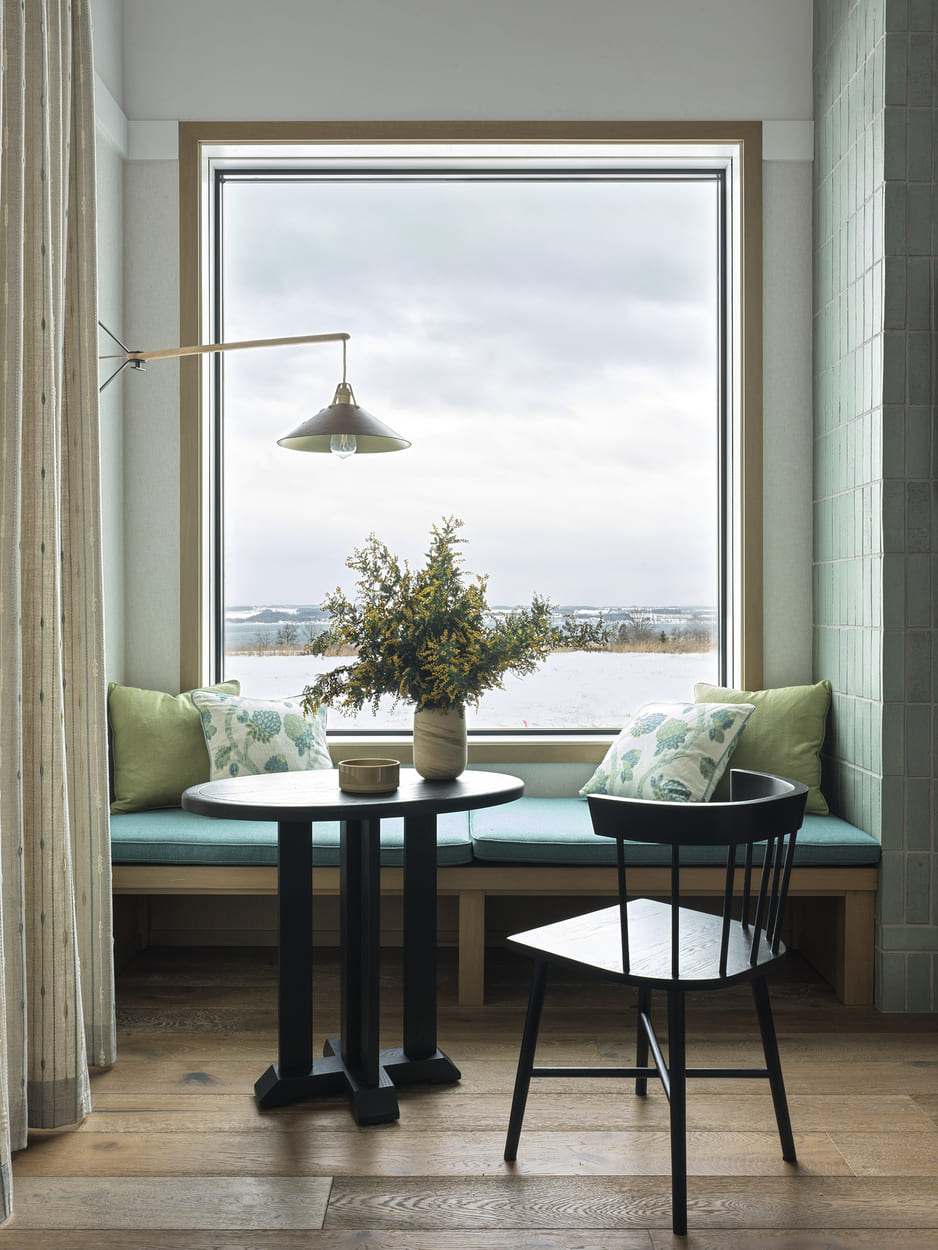
This duality also informs the guest experience. The Meadow Studios reinterpret the idea of luxury through restraint and connection to place. “Reimagining the guest experience meant balancing the intimacy of a historic inn with the expectations of modern travelers,” McCarthy notes. “We introduced the Meadow Studios as contemporary accommodations defined by vaulted ceilings, large windows, minimalist oak millwork, and handmade tile that creates a subdued palette and focuses attention on the connection to the landscape beyond. At the same time, we preserved the character of the guest rooms within the Farmhouse so visitors can still experience the warmth and history of the original residence. Together, these spaces allow guests to experience both the charm of a historic home and the subtlety of contemporary designed spaces.”
Material choices reinforce this dialogue between past and present. The palette draws directly from the region’s agricultural heritage while avoiding literal replication. “Our material palette draws from the agricultural traditions of the region while expressing a contemporary architectural language,” McCarthy explains. “We introduced painted brick and standing seam metal as both are used often in the historic barns and farm buildings that define the surrounding landscape. Within the Meadow Studios, we incorporated natural oak millwork and handmade tile to bring warmth and texture to the interiors. Paired with the restored brick and detailing of the historic home, these materials demonstrate how often the same materials reimagined in different ways can balance both past and present.” The result is a continuity that feels conceptual rather than stylistic.
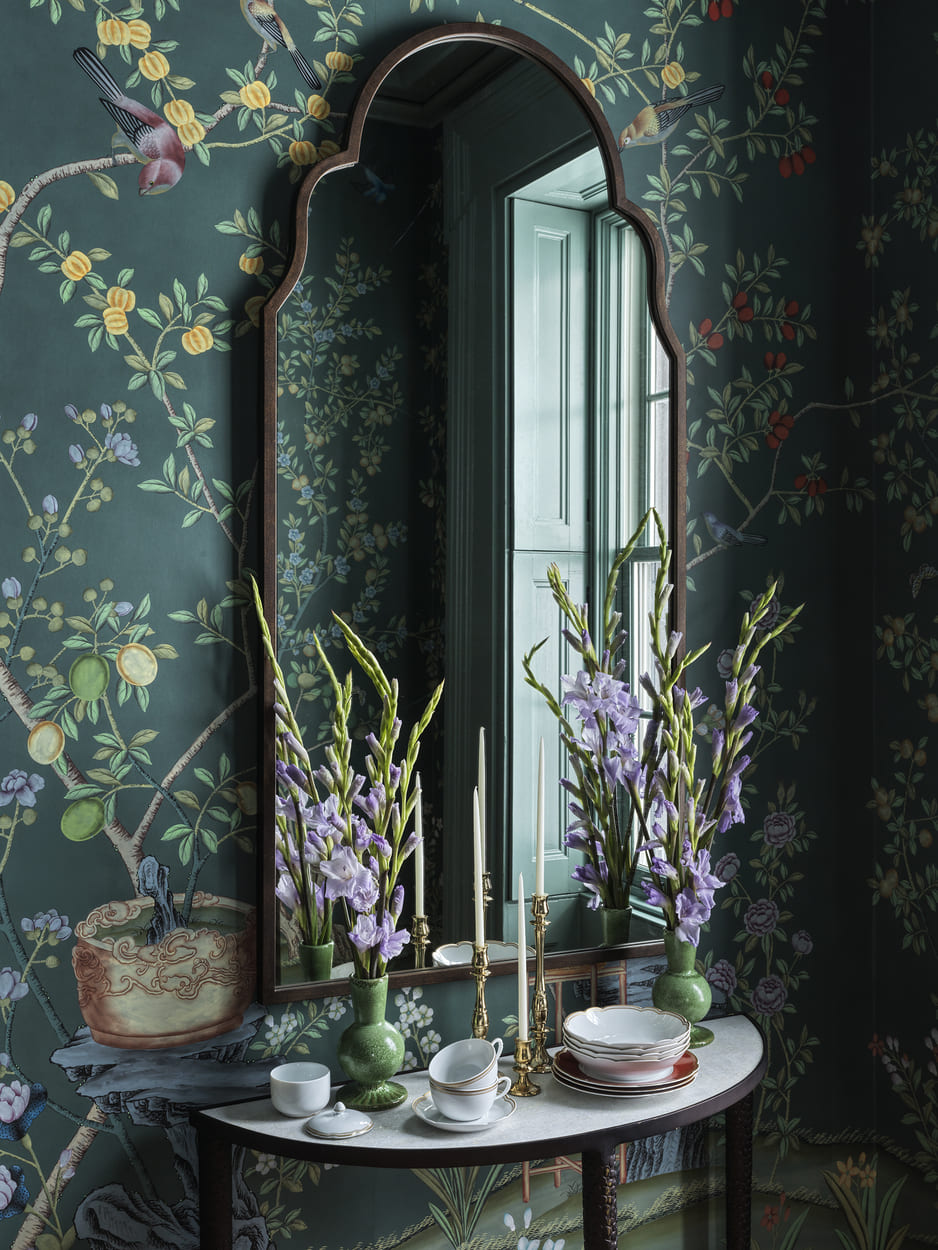
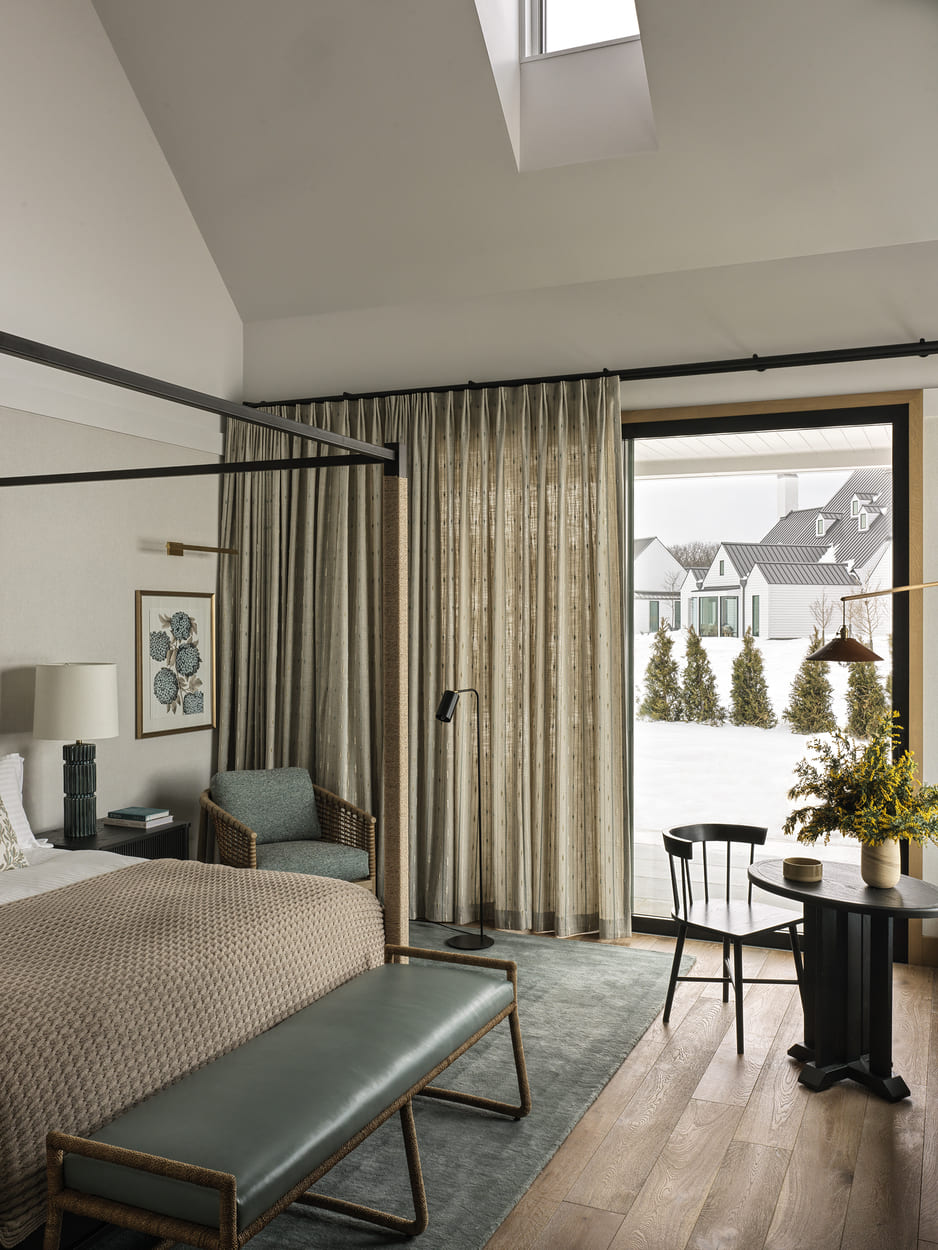
The Farmhouse also operates as a spatial hinge within the resort. Positioned between the historic inns in the village and the more contemporary spa complex on the hillside, it mediates between two distinct architectural and experiential registers. This in-between condition is not incidental; it allows the property to function as a cohesive whole rather than a collection of separate parts.
Beyond the buildings themselves, the landscape plays an integral role in shaping the experience. Gardens, porches, and outdoor gathering areas extend the architecture into its surroundings, creating a sequence of spaces that shift with the seasons. “The landscape surrounding the Farmhouse plays an essential role in the guest experience,” McCarthy says. “We extended the experiences of the building outdoors by creating porches, gardens, and gathering spaces that invite guests to spend time beyond the interiors. Firepits and courtyard spaces encourage guests to gather and meet each other, while views toward Cayuga Lake and the surrounding countryside perfectly exemplify the beauty of the Finger Lakes. By framing these outdoor spaces as part of the architecture, we created a seamless relationship between the interiors and the landscape.”
At its core, however, the project remains grounded in a more elemental idea: the Farmhouse as a place of gathering. Its original function as the center of a working farm is reinterpreted for a contemporary context, where communal experience is as important as private retreat. “At its core, the Farmhouse remains a place to bring people together,” McCarthy reflects. “We restored the original parlors, porches, and communal spaces so the heart of the building retains the scale and intimacy of a private residence. At the same time, we expanded the property with the new guest rooms, the Meadow Studios, and wellness elements to provide guests with new spaces to gather and unwind. Through careful restoration and thoughtful expansion, we allowed the Farmhouse to honor history while evolving into a lively part of the Inns of Aurora experience.”

Once upon a time there were crafts workshops. Then came the advent of industrial design and mass production.