

The community magazine for the community
Powered by 
The community magazine for the community
Powered by
© Design Courier. Powered by Medelhan. Developed by Broadweb.80
| CANVAS OF PLANS & DRAWINGS |
INTERIOR & DÉCOR, but with a twist |
| HOTELS & RESTAURANTS, beyond mainstream |
Notes on ART |
| Into big AFFAIRS | INSIDERS |
| GLIMPSES | |
Keywords:
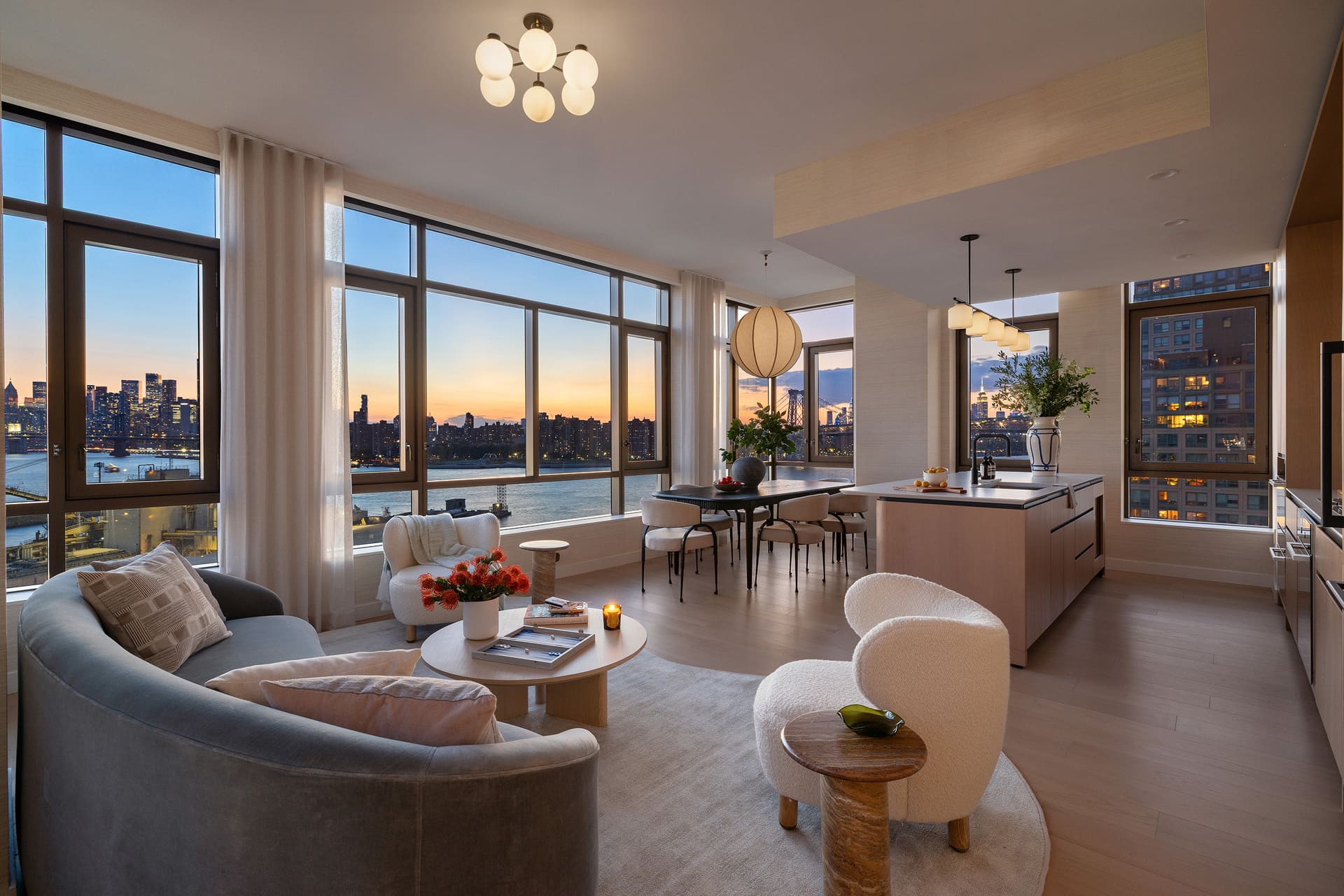
Developed by Naftali Group and designed by Brandon Haw Architecture, the new residential tower sits along Williamsburg’s last major waterfront parcel. While the building’s exterior – a layered composition of glass, bronze-toned metal, and oversized picture-frame windows – responds directly to the changing light of the riverfront, Residence 21D shifts the focus toward atmosphere and material continuity rather than pure spectacle.
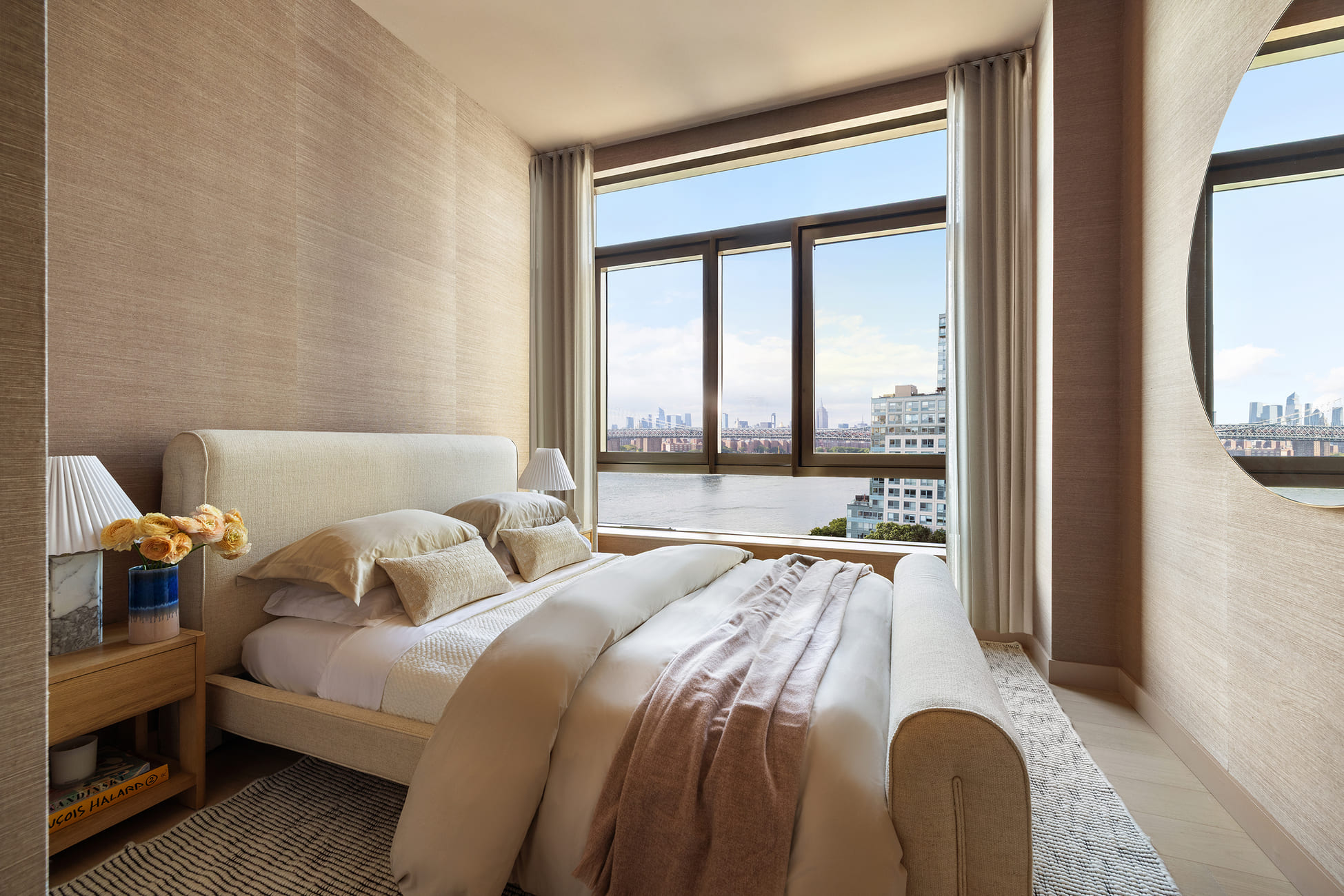
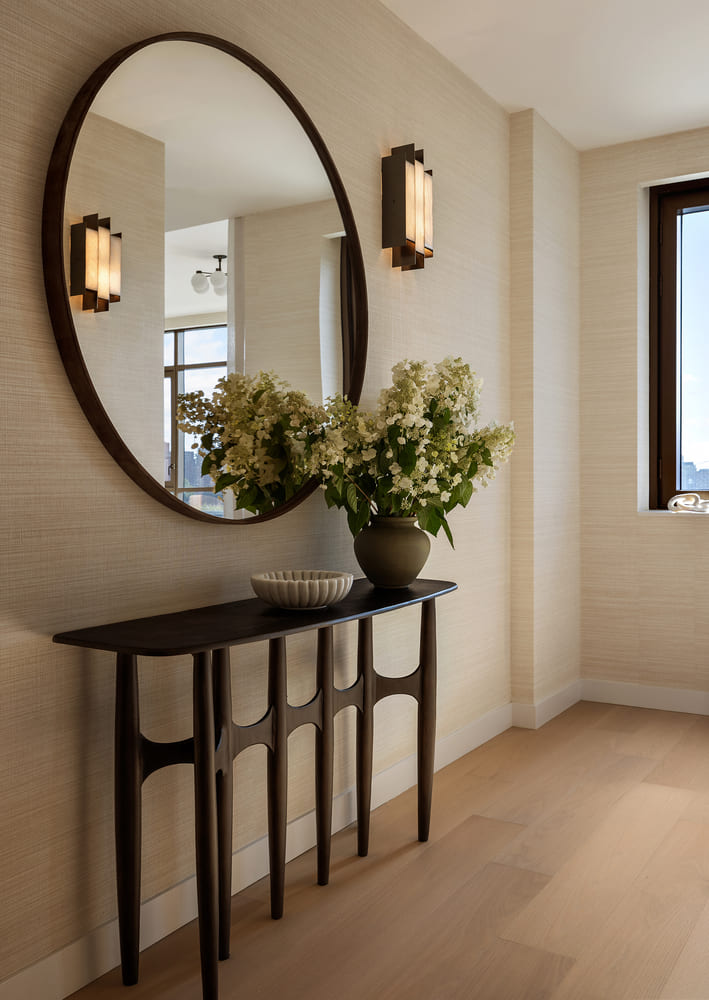
Inside the apartment, the design references the waterfront less literally and more spatially. Curved furnishings, rounded edges, and freeform mirrors introduce a sense of movement that subtly echoes the river below, softening the rigidity often associated with contemporary high-rise interiors. The result is a space that feels fluid without becoming overly styled.
Material selection plays a defining role. Velvet upholstery, shearling accents, textured wool, burl wood, and cerused oak bring warmth and density to the interiors, while concrete details and matte black finishes ground the softer elements with a more architectural sensibility. Bronze accents quietly connect the apartment to the façade outside, creating continuity between exterior and interior without relying on overt repetition.
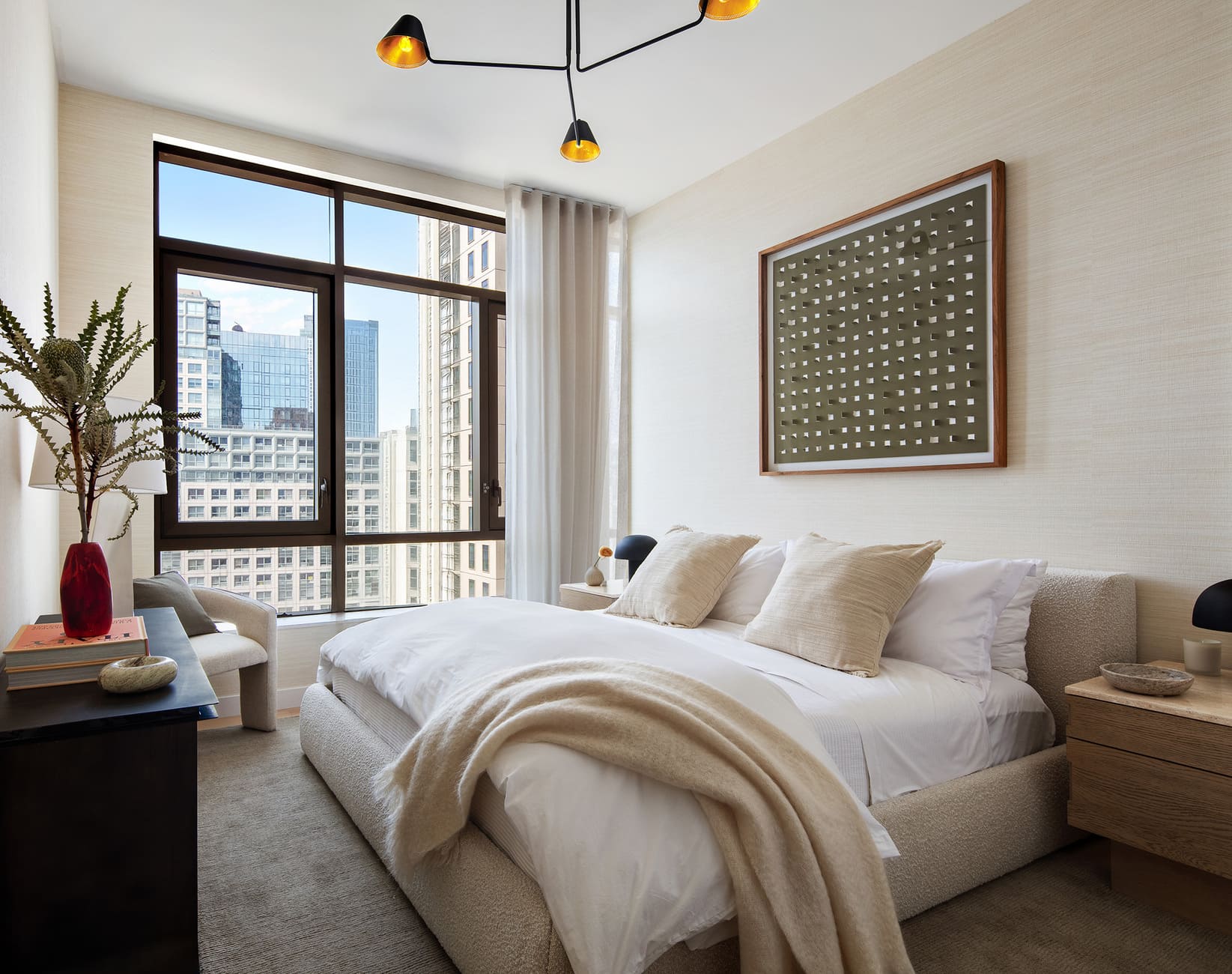
What stands out is the apartment’s resistance to excessive polish. Rather than prioritizing visual sharpness, the interiors lean into tactility and tonal depth. Light is absorbed through textured fabrics and matte surfaces instead of amplified through reflective finishes, giving the rooms a calmer and more residential atmosphere despite the scale of the views beyond the windows.
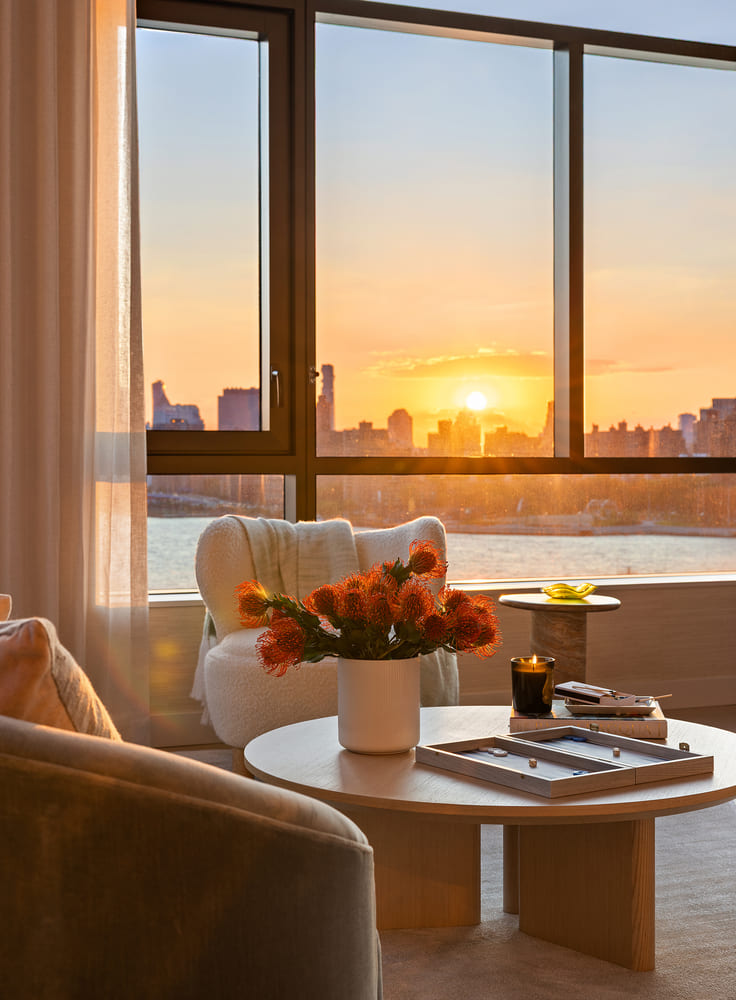
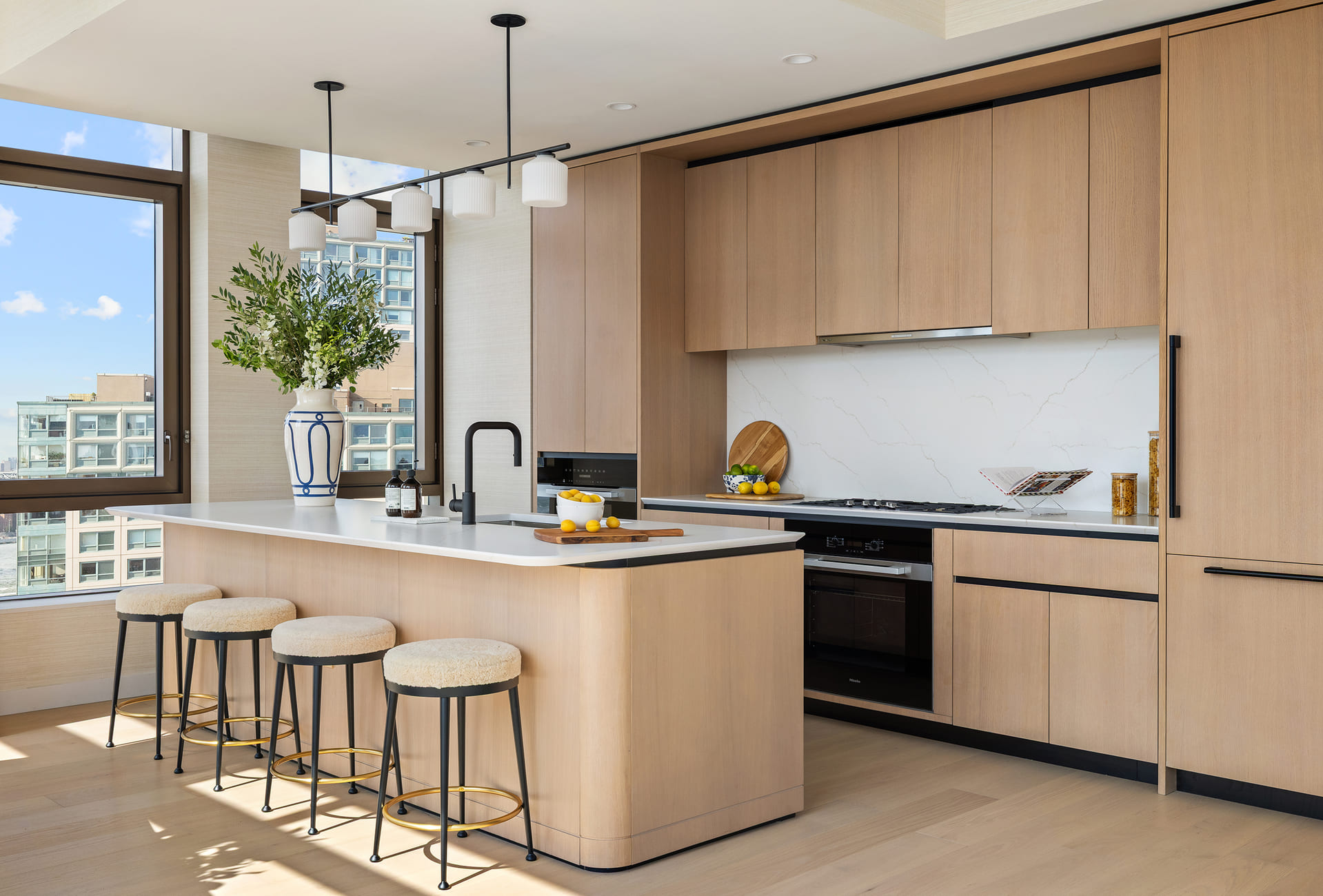
The kitchen reflects this approach particularly well. A sculptural island with curved oak detailing avoids the hard-edged minimalism common in many new developments, introducing a softer focal point within the open-plan living space. Throughout the apartment, materials are allowed to carry the visual weight instead of decorative gestures.
That emphasis on material atmosphere aligns with a broader shift happening in contemporary residential design, particularly in Brooklyn developments where buyers increasingly seem drawn to interiors that feel more personal and less standardized. At One Williamsburg Wharf, the design avoids the hyper-curated neutrality often associated with luxury staging, instead creating spaces that feel quieter, layered, and intentionally lived-in.
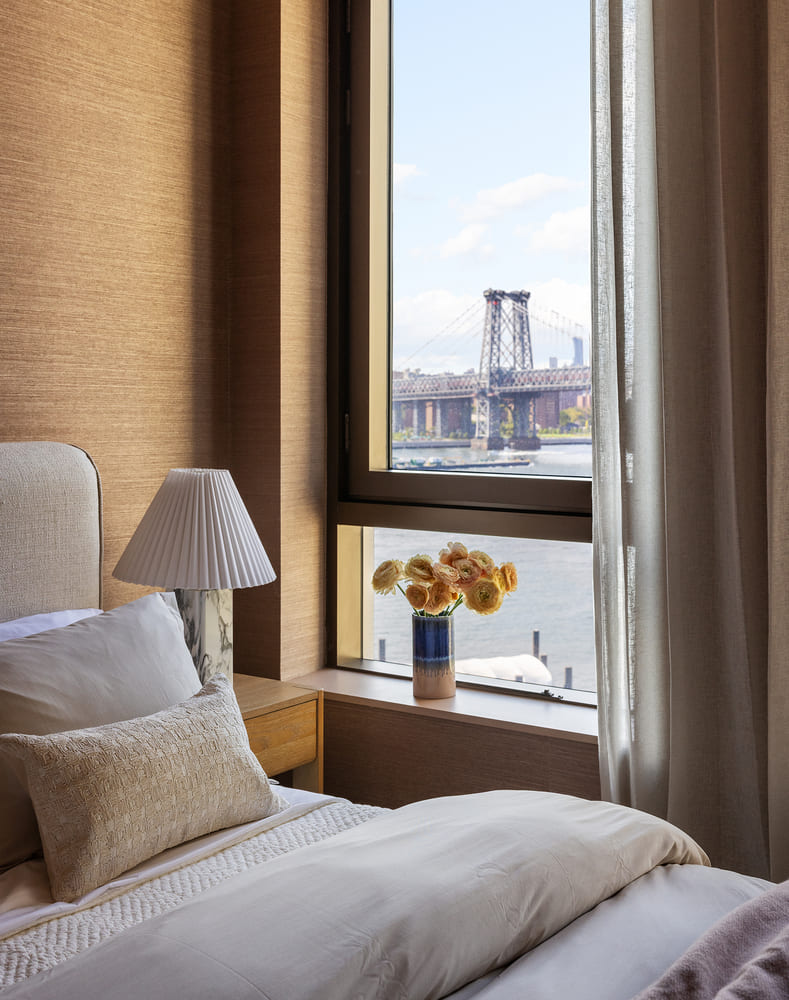
The architecture itself reinforces that sensibility. Brandon Haw Architecture designed the residences around natural light and openness while maintaining a sense of intimacy within the layouts. Floor-to-ceiling windows frame uninterrupted views of the Manhattan skyline and East River, yet the apartment never feels entirely dominated by them. The interiors maintain their own identity alongside the landscape outside.
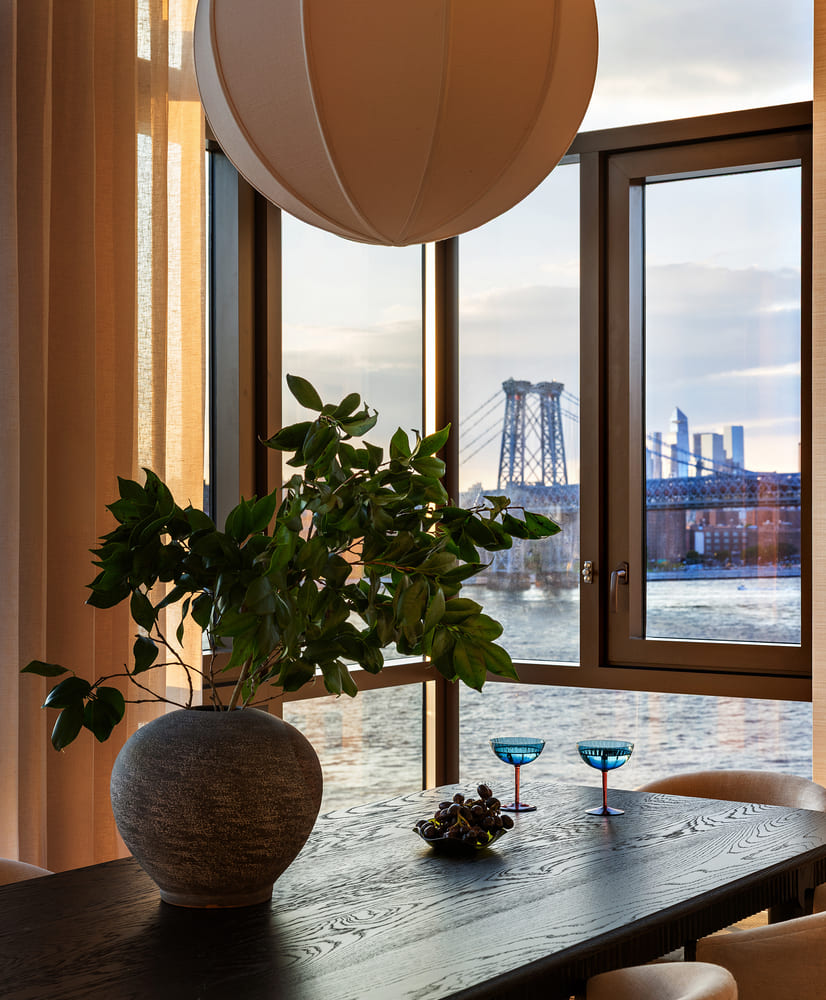
Across the building, shared spaces designed by Ward + Gray continue the same material language through warm woods, tailored upholstery, and subdued lighting. Even the larger waterfront masterplan surrounding the tower – with landscaped promenades, green spaces, and public pathways – prioritizes permeability and softness over monumentality.
Once upon a time there were crafts workshops. Then came the advent of industrial design and mass production.