

The community magazine for the community
Powered by 
The community magazine for the community
Powered by
© Design Courier. Powered by Medelhan. Developed by Broadweb.80
| CANVAS OF PLANS & DRAWINGS |
INTERIOR & DÉCOR, but with a twist |
| HOTELS & RESTAURANTS, beyond mainstream |
Notes on ART |
| Into big AFFAIRS | INSIDERS |
| GLIMPSES | |
Keywords:
The clients, a couple of successful entrepreneurs raising five children, approached the project with a very specific ambition: to transform an inherited house into a fully functional domestic ecosystem. Not an image of family life, but its operational reality – messy, layered, social, and intimate at the same time. The existing building, while emotionally familiar, no longer responded to this complexity. Structurally aged and spatially rigid, it required not gentle updating but deep reconstruction.
The intervention was therefore radical. The house was partially demolished, reassembled, and extended, with new volumes inserted to correct proportions and unlock continuity. Every surface was reconsidered. Floors, ceilings, and façades were reworked, and even structural irregularities inherited from decades of settlement became part of the design challenge. During construction, the precision of gypsum board ceilings revealed subtle distortions that had accumulated over time; instead of masking them, the design absorbed them through layered technical solutions, using recessed soffits and calibrated lighting as instruments of correction. The result is a home that reads visually as seamless, even though it is technically the outcome of extensive reconstruction.
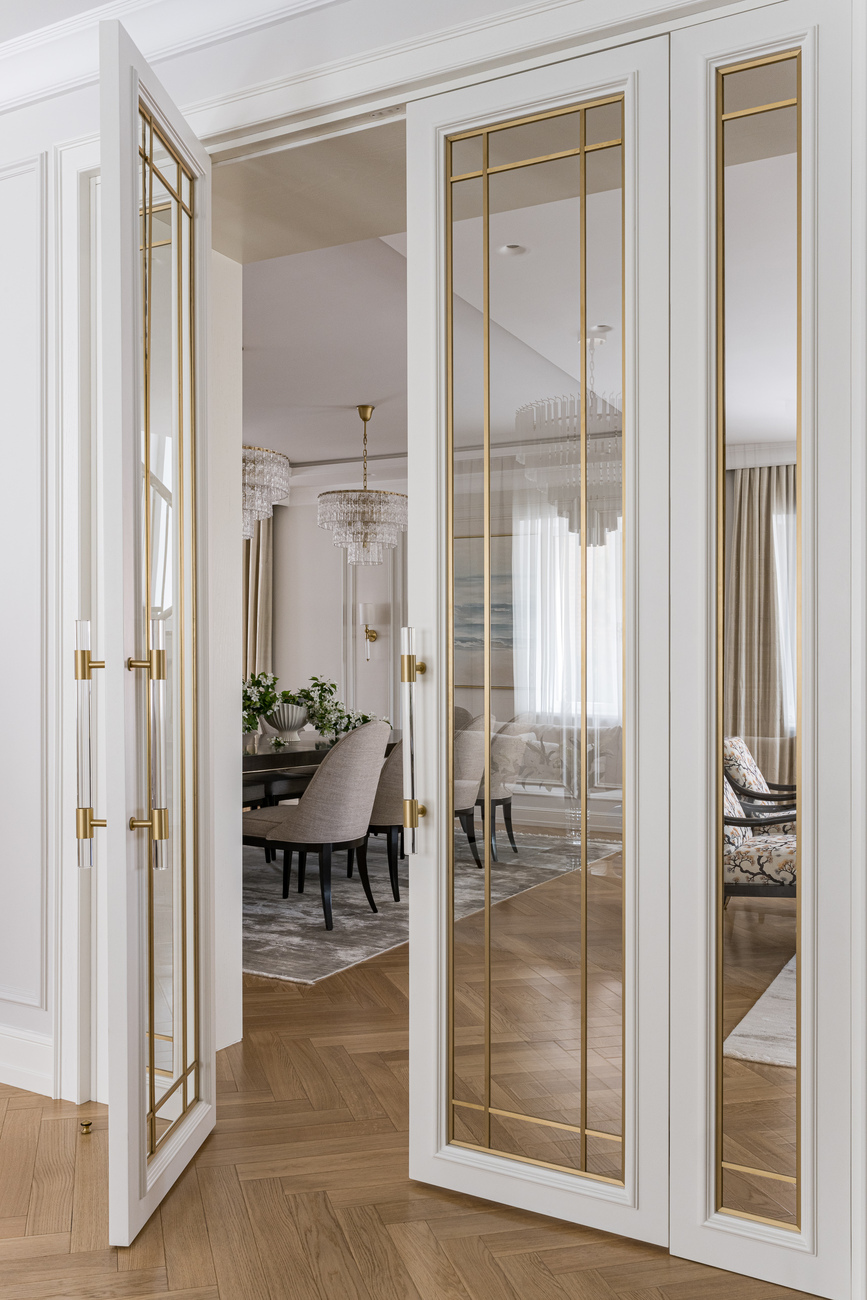
At 250 square meters, the house is organized with a clear architectural narrative: public life on the ground floor, private life above. This separation is not rigid but rhythmic. The first floor is conceived as a continuous social landscape, where spaces flow into one another without interruption. The entrance hall leads directly into the living room, which opens into the dining area, creating a single shared environment for daily interaction. Here, the house performs at its most extroverted – hosting conversations, meals, guests, and the informal choreography of family life.
Behind this openness lies a careful distribution of functions. A working kitchen and service block remain discreetly separated from the main representation areas, ensuring that the visible home retains clarity while the operational layer remains hidden. This dual structure – visible and invisible – becomes one of the project’s defining logics.
Upstairs, the atmosphere changes completely. The second floor is a quiet internal world, composed with an almost residential intimacy. The master suite is conceived as a contained volume, where bedroom, walk-in wardrobe, and bathroom are absorbed into a single calm gesture. Around it, the children’s rooms are distributed with precision: twin girls share a space, younger siblings occupy another, while the eldest daughter has a more autonomous room. The arrangement avoids symmetry in favor of lived reality, acknowledging both individuality and coexistence.
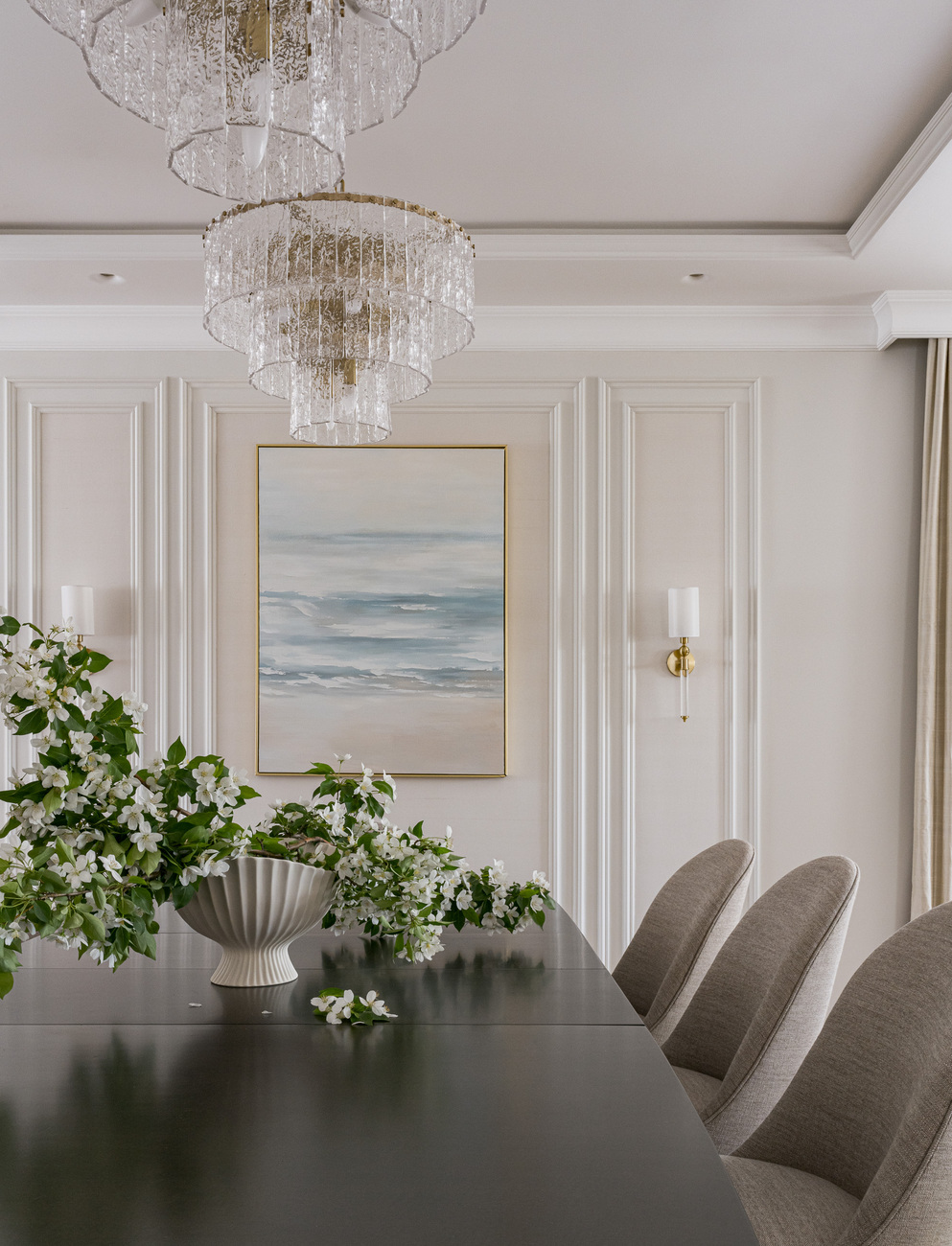
The interior language of the house was not imposed but derived from its inhabitants. The designer worked closely with the family, translating habits, gestures, and emotional dynamics into spatial form. At the center of this interpretation is the figure of the mother – an elegant, composed presence whose role within the household informed the overall sensibility of the project. The result is not a thematic interior, but an atmosphere shaped by temperament.
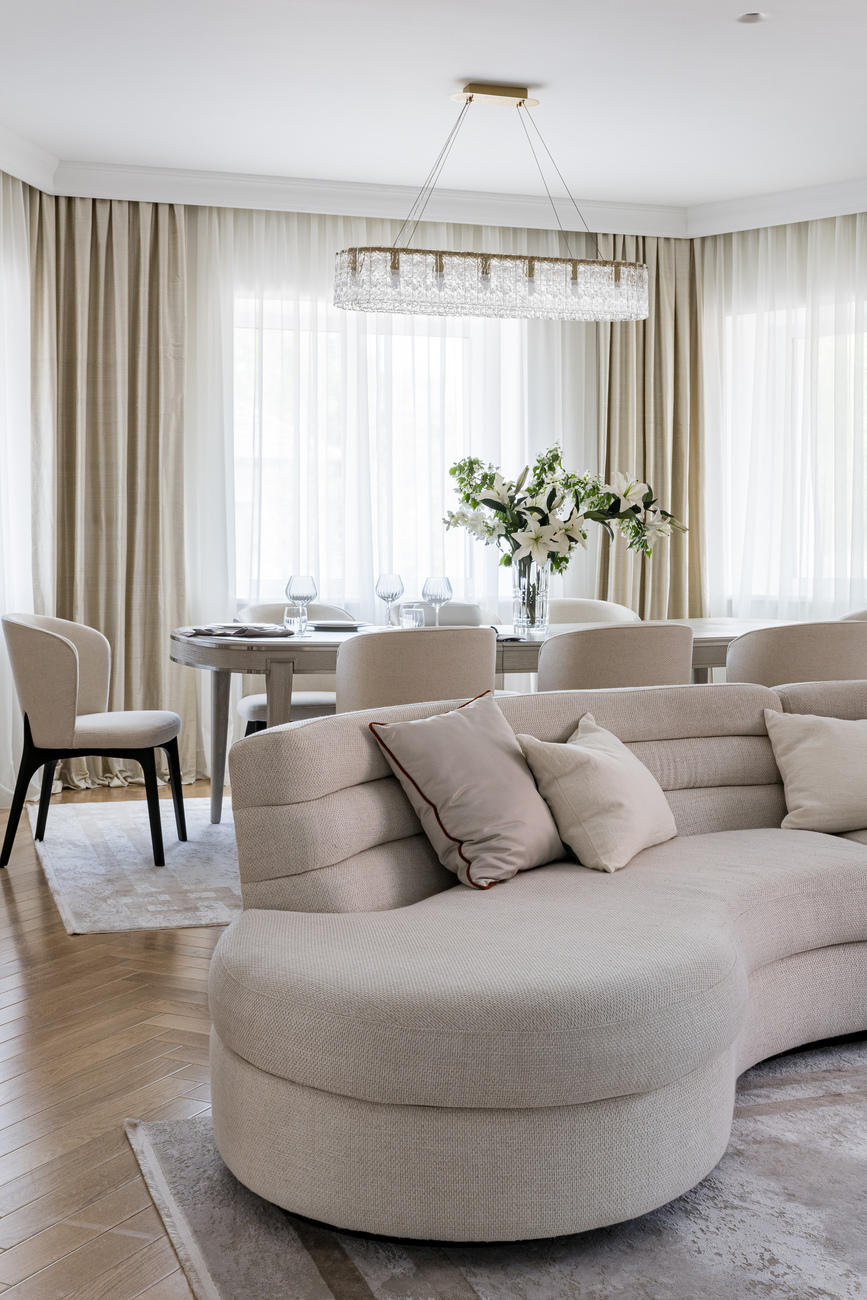
Modern neoclassicism becomes the framework for this translation. Stripped of rigidity, it is treated as a quiet structure rather than a decorative style. The palette is restrained: warm neutrals, muted pastels, soft transitions between materials. The goal is not visual impact but atmospheric stability. Light is used as a material in itself, shaping perception, softening edges, and dissolving unnecessary contrast. The interior is designed to reduce noise – both visual and emotional – so that everyday life can take center stage.
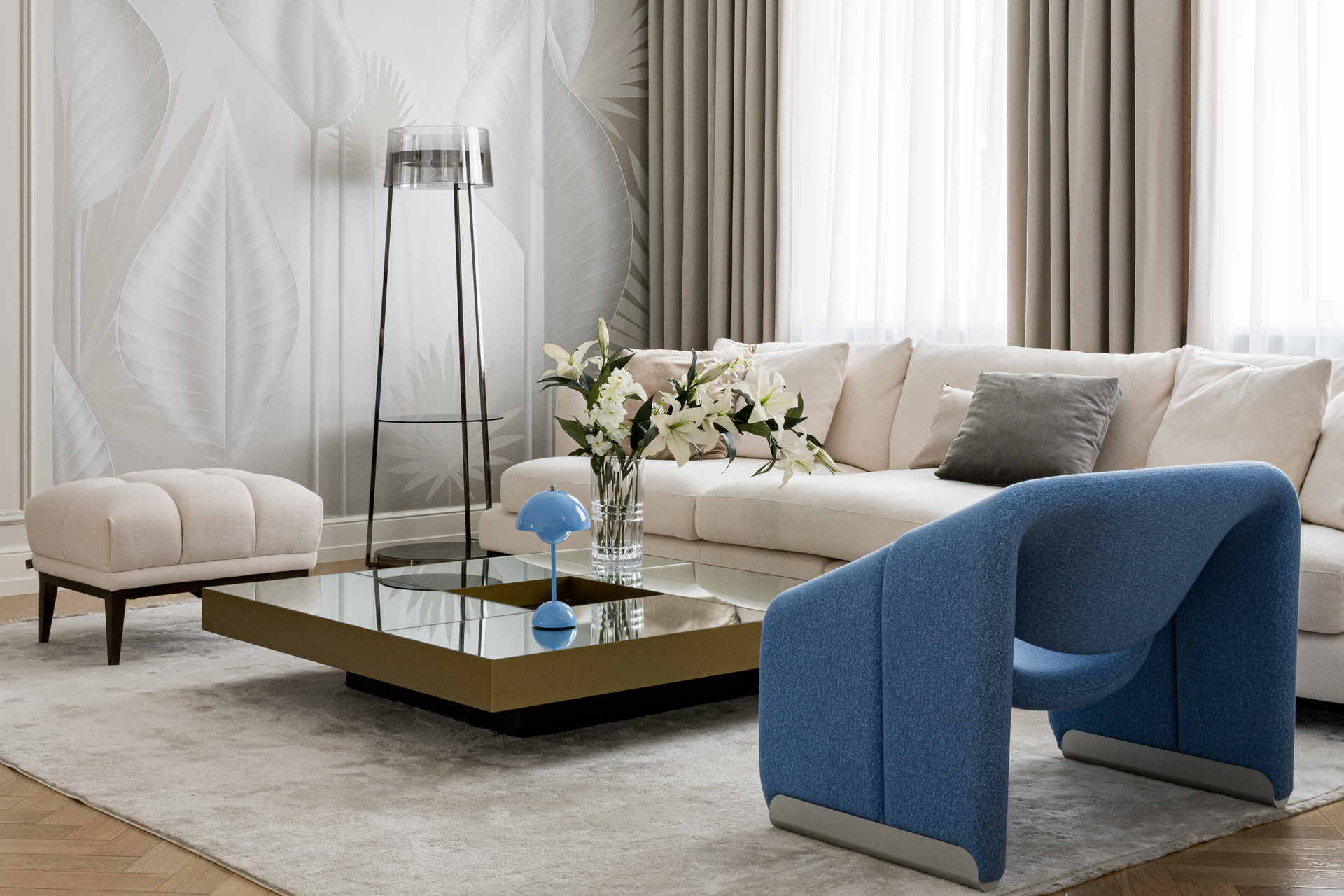
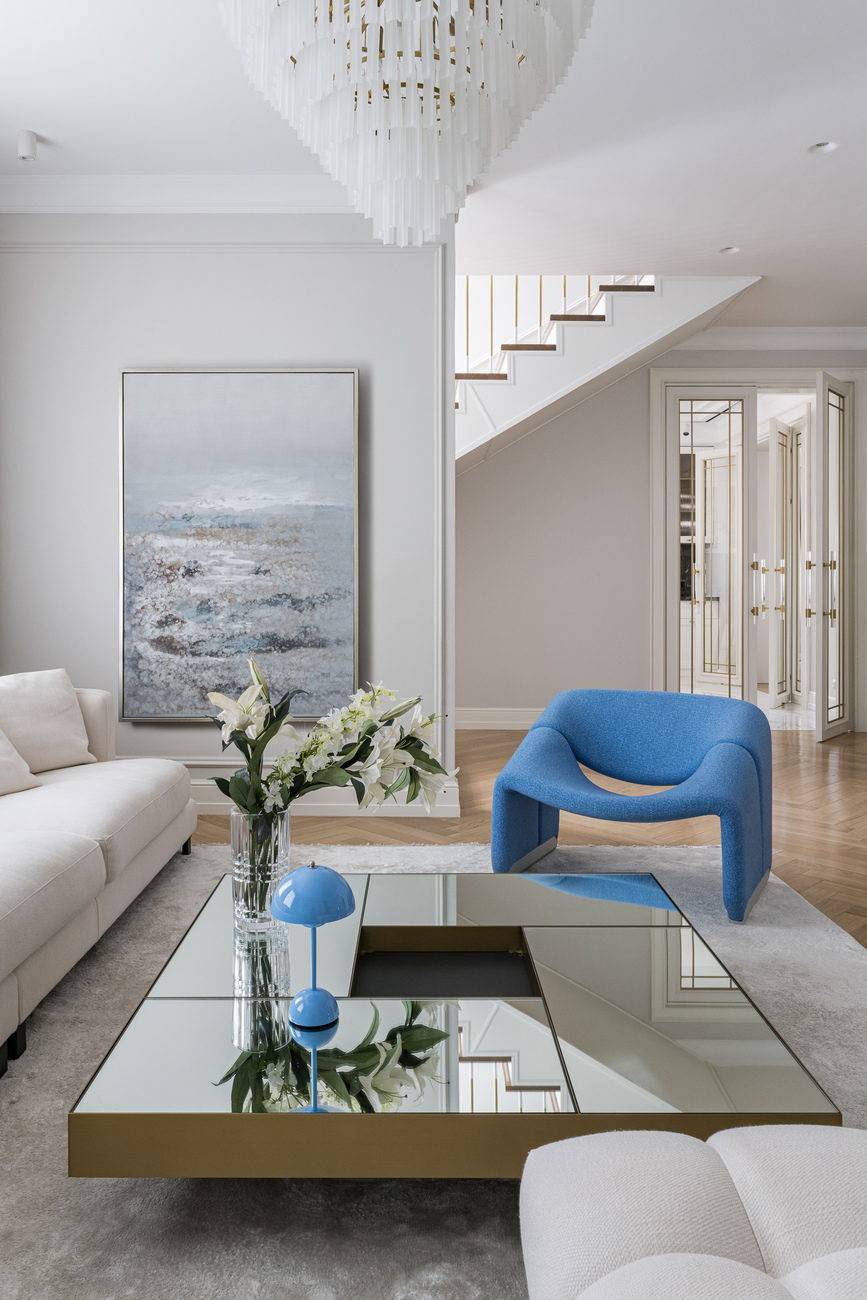
This clarity is most evident in the main living and dining space, conceived as a single continuous composition. In the living area, sculptural furniture such as the Groovy Chair by Pierre Paulin introduces a soft counterpoint to the architectural discipline of the room. Lighting by Italamp and textured wall surfaces by Fresq create depth without excess. A carefully placed artwork by Uttermost punctuates the space, preventing uniformity while maintaining calm.
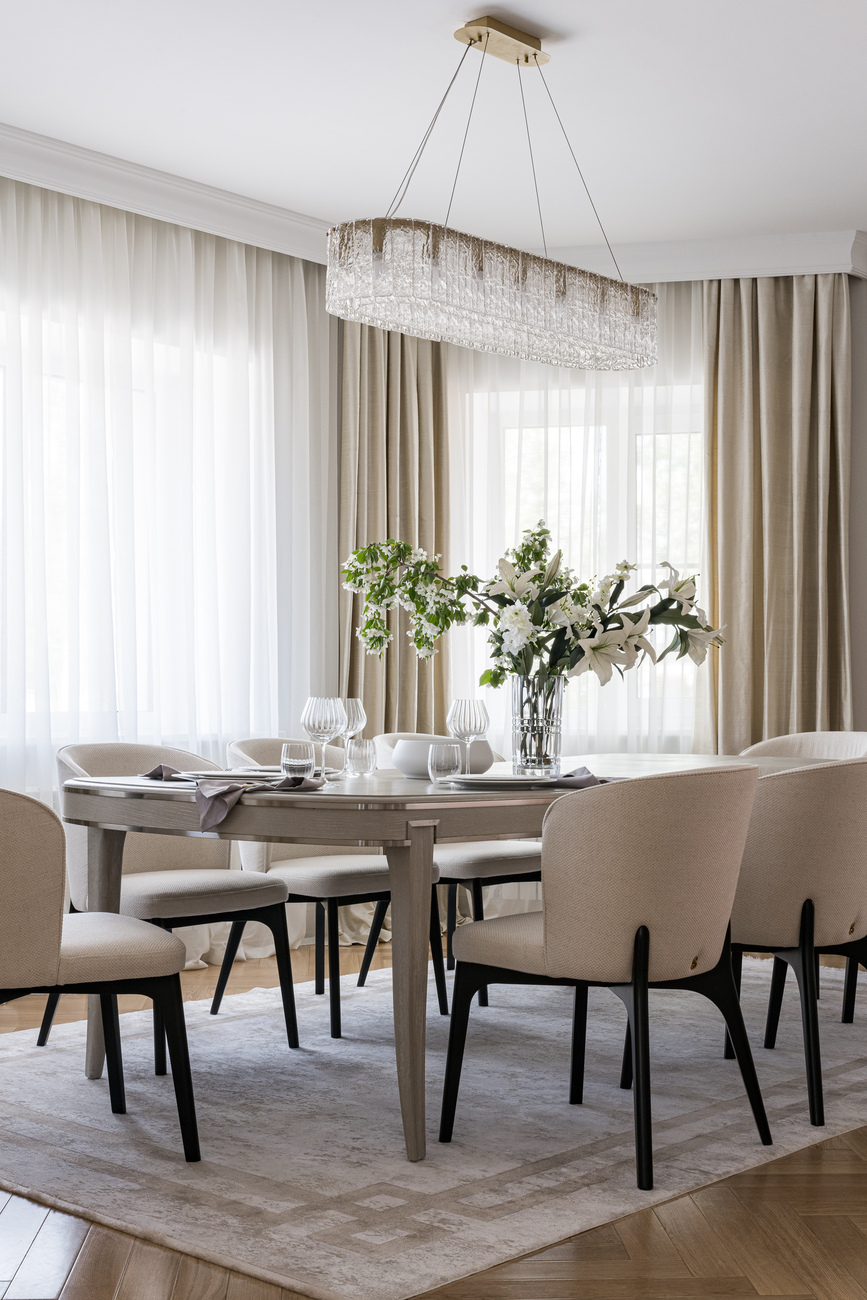
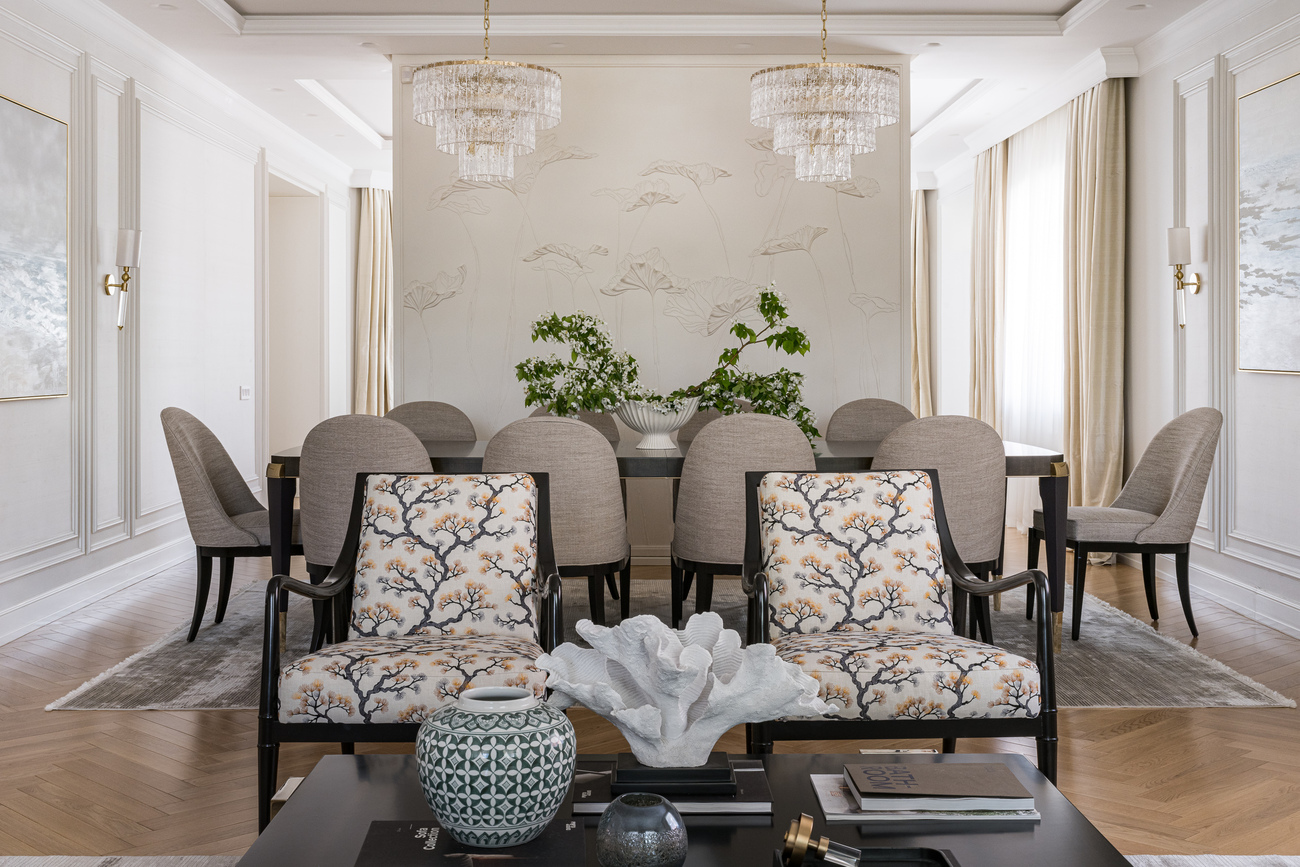
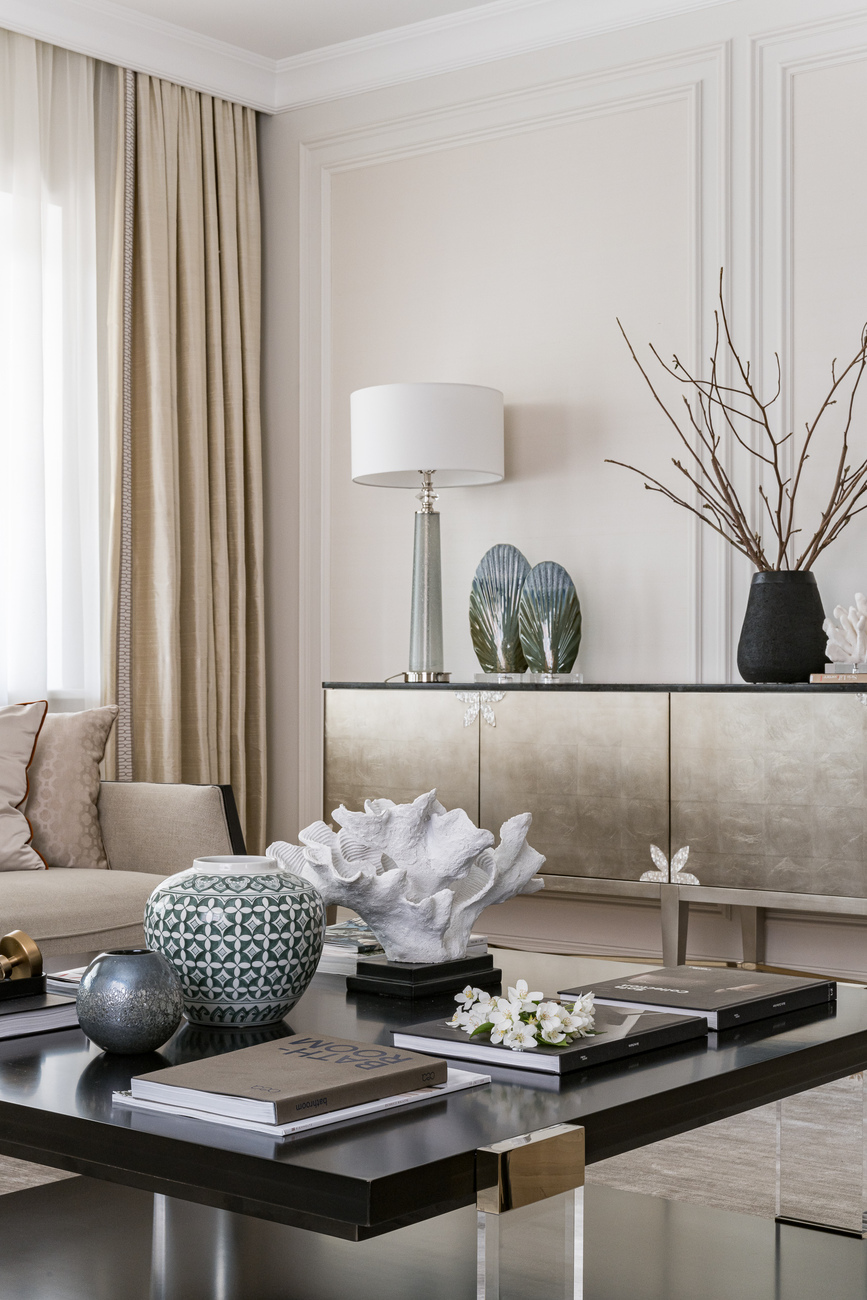
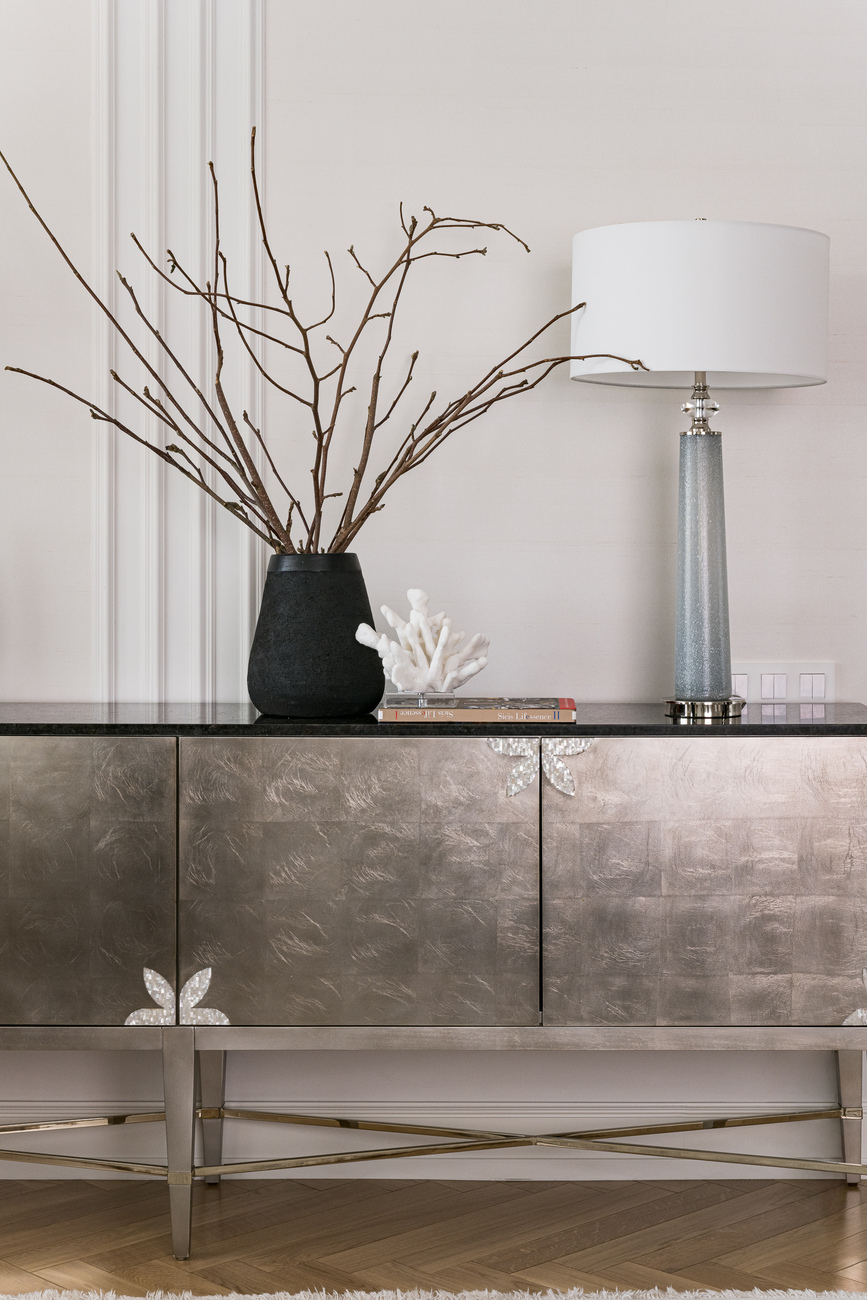
The dining area extends this language but introduces a more tactile narrative. Rather than literal thematic decoration, the space suggests a marine atmosphere through material associations – fluid forms, soft reflections, and organic references. At its center, a bas-relief with lilies, executed by local artisans from the designer’s drawings, becomes a living surface, constantly shifting with light and shadow. Furniture by Caracole and lighting by Newport reinforce the elegance of proportion, while accents inspired by bonsai symbolism introduce a subtle narrative of growth and continuity. A silver sideboard with mother-of-pearl inlay reflects the room in fragmented layers, adding depth without weight.
A second, more intimate living room introduces a different tempo. Here, curved seating by Eichholtz softens the geometry of the space, while the central architectural gesture – a Bianco Dolomite marble partition with bookmatched veining – organizes the room without enclosing it. This element operates simultaneously as wall, sculpture, and infrastructure. Integrated within it are multiple functions: a concealed television, a bio-fireplace framed in brass, and mirrored surfaces that extend spatial perception. It is not an object placed in the room, but a room constructed around an object.
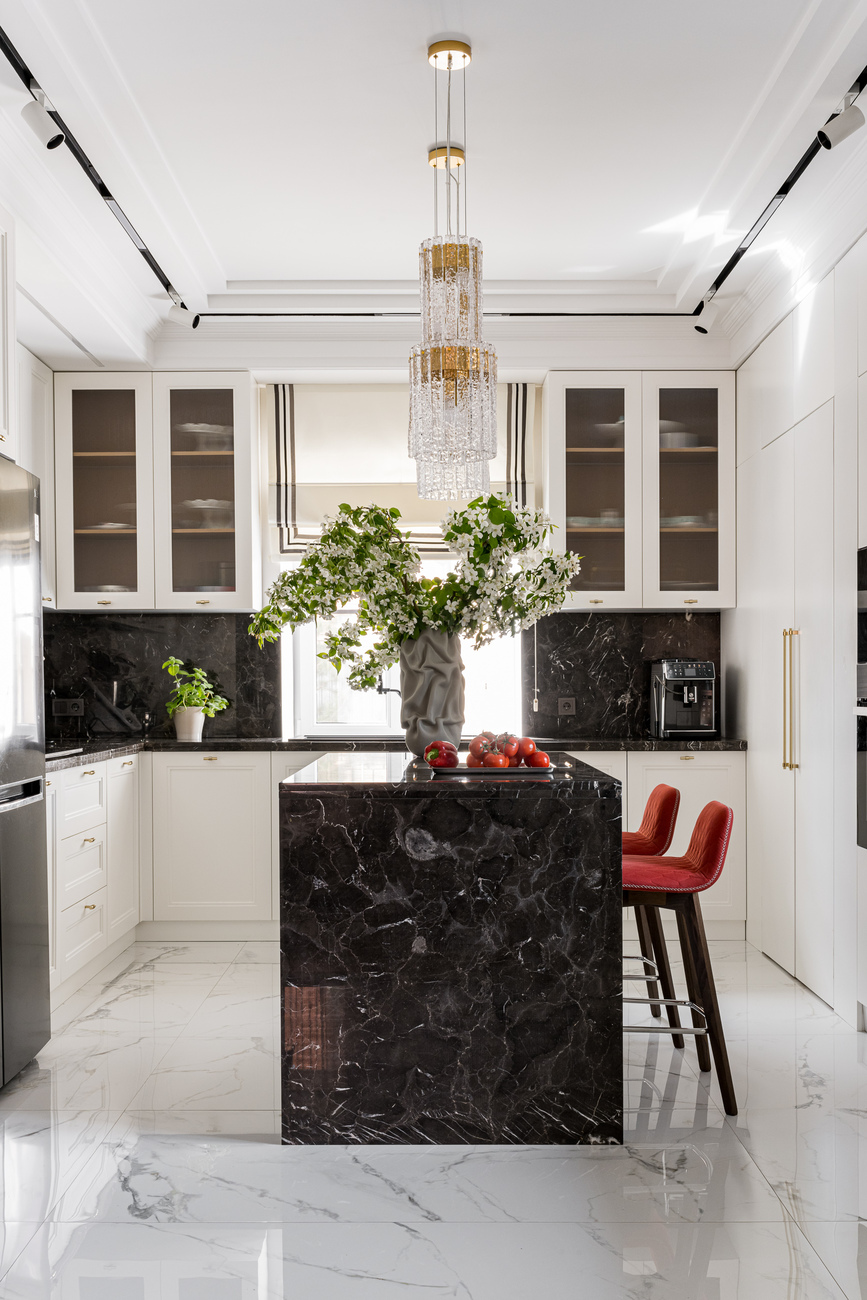
The kitchen represents another layer of precision, where the entire design originates from material selection. The process began not with layout, but with stone. Marble slabs were chosen directly in workshops, evaluated for their natural structure rather than catalog appearance. Once selected, the material dictated the composition: it flows continuously across island, countertop, and backsplash, forming a unified geological surface. Custom cabinetry and hidden storage preserve visual silence, while lighting by Odeon Light introduces functional clarity without disrupting the material narrative.
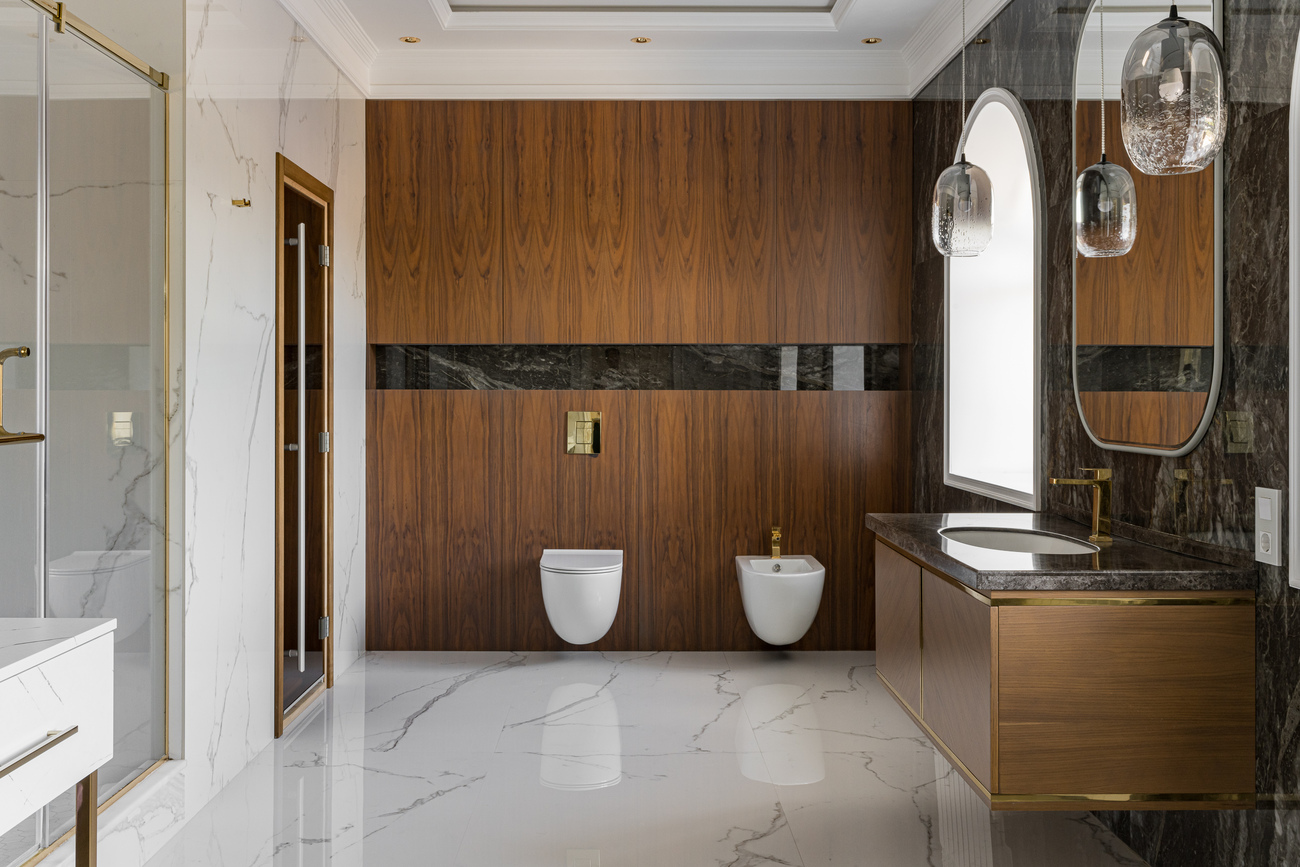
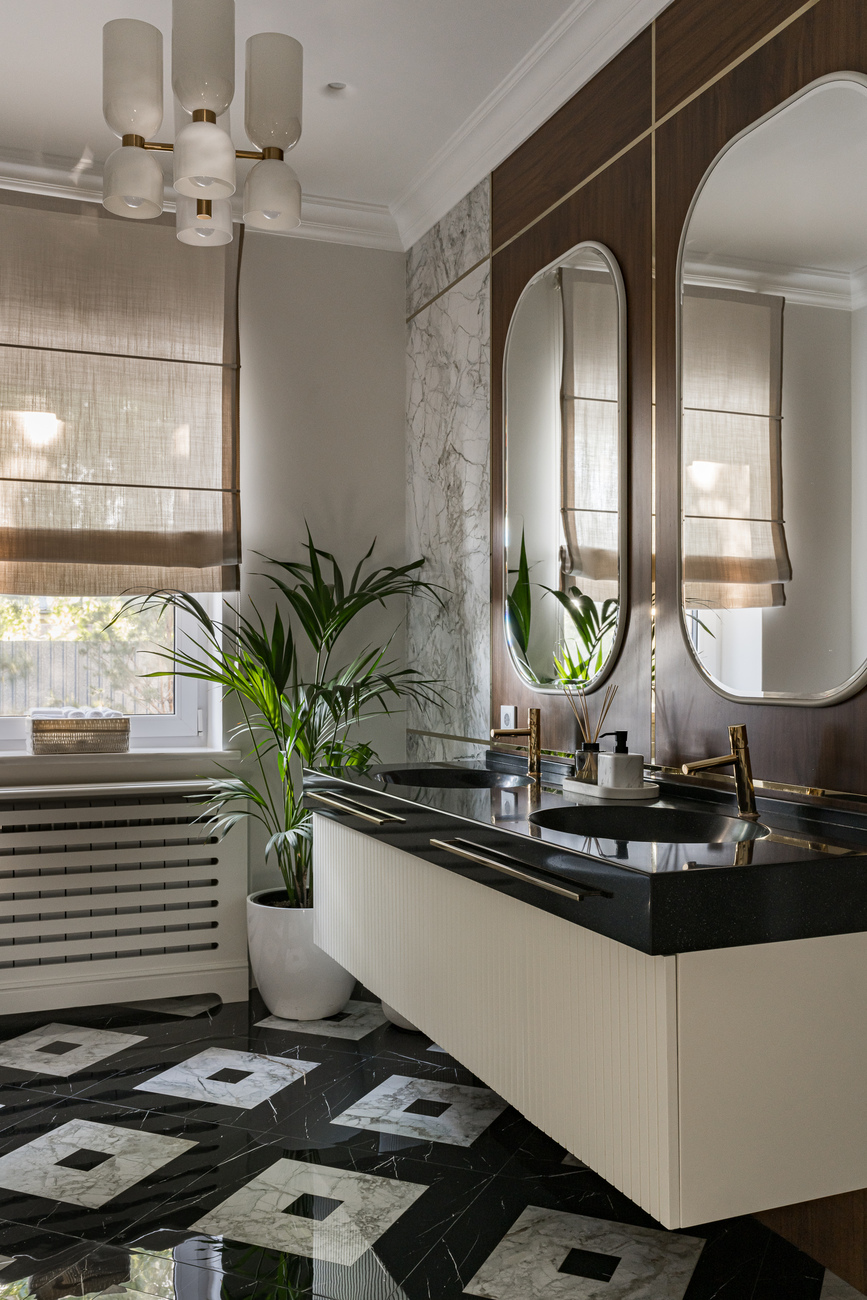
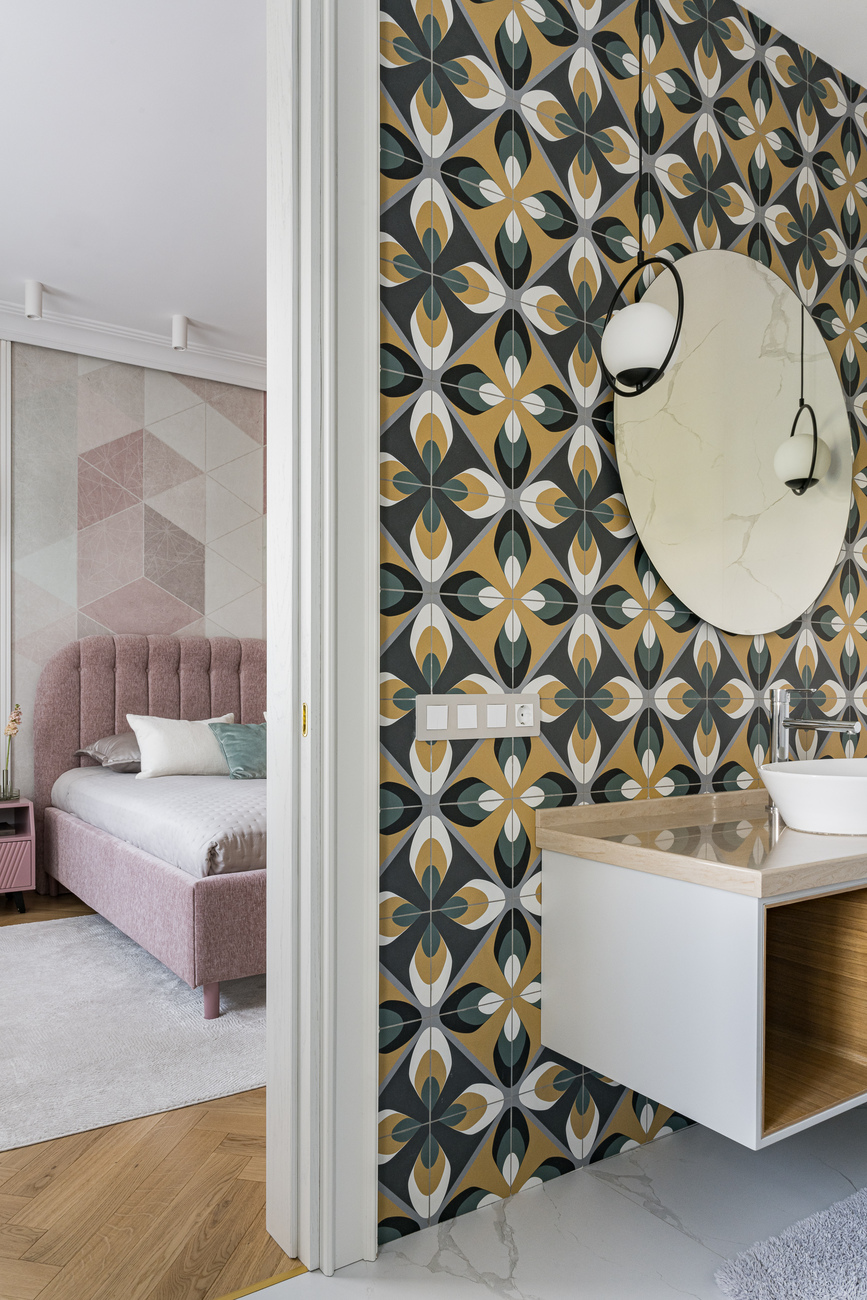
In bathrooms and secondary spaces, the same attention to specificity continues. Tiles are not simply installed but re-cut and recomposed on site to align perfectly with architectural geometry. Mirrors and sinks are custom-designed, reinforcing the idea that even utilitarian elements contribute to the spatial identity of the house.
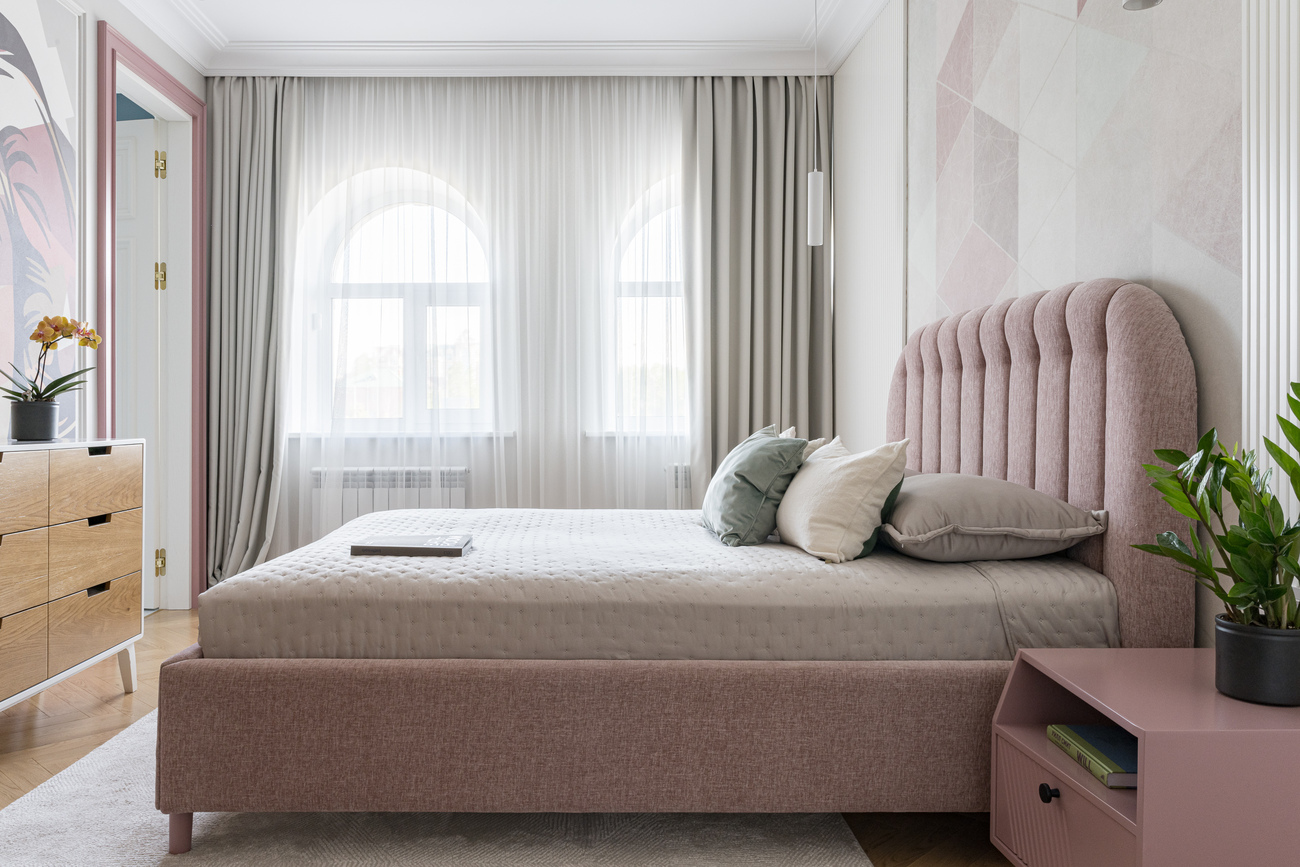
The master bedroom distills the project’s core intention: calm through continuity. Private functions are concealed within a unified volume, allowing the room to read as a single uninterrupted atmosphere. Furnishings by Caracole reinforce softness and balance, while maintaining a strong sense of composure.
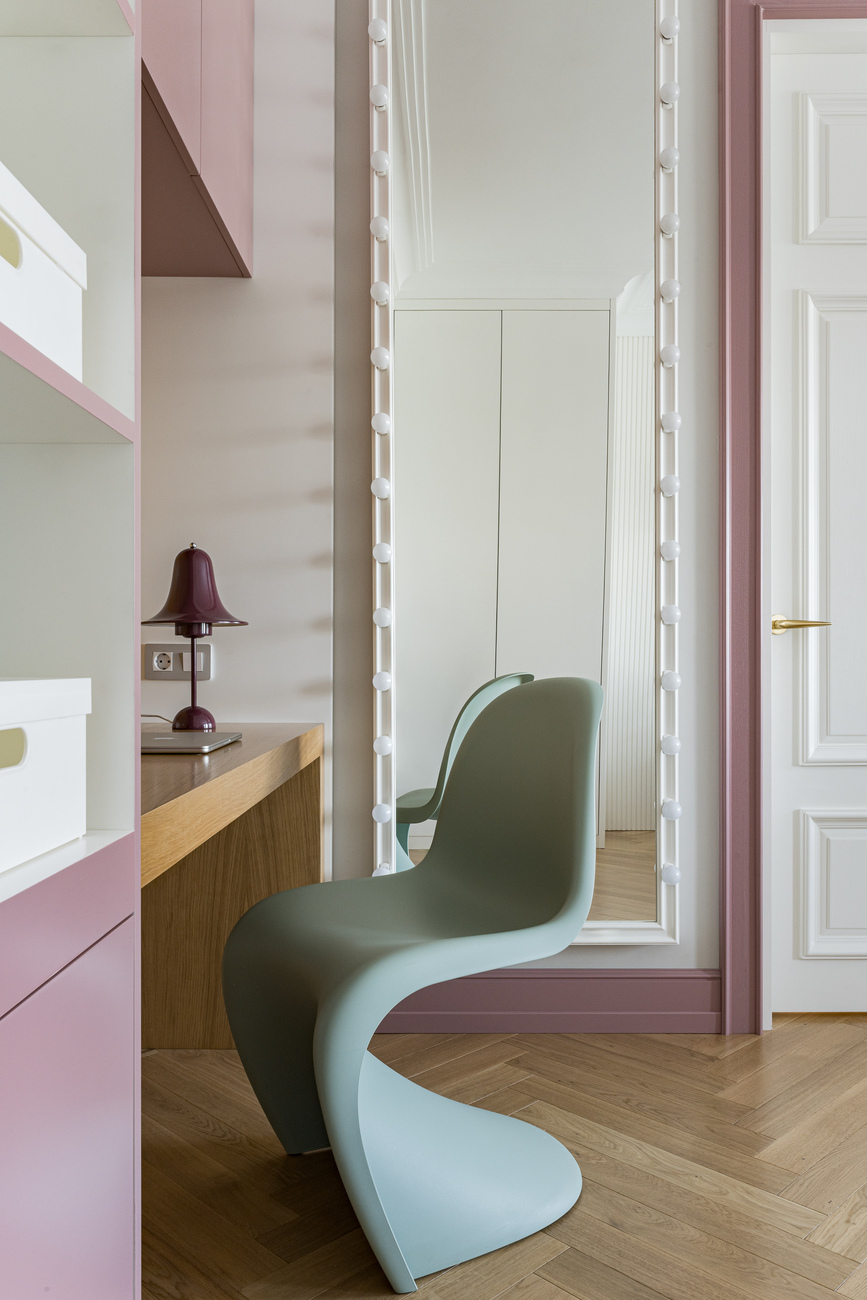
Children’s rooms introduce controlled variation. In one, textiles by Alessandro Bini define the chromatic foundation, extended into built-in furniture and architectural detailing. Custom carpentry ensures adaptability, allowing the space to evolve with its occupants rather than remain fixed in time.
Rather than concluding in resolution, the project leaves the sense of a system in motion – an architecture that does not crystallize into a final form, but continues to adjust itself to the shifting rhythms of the family it contains.
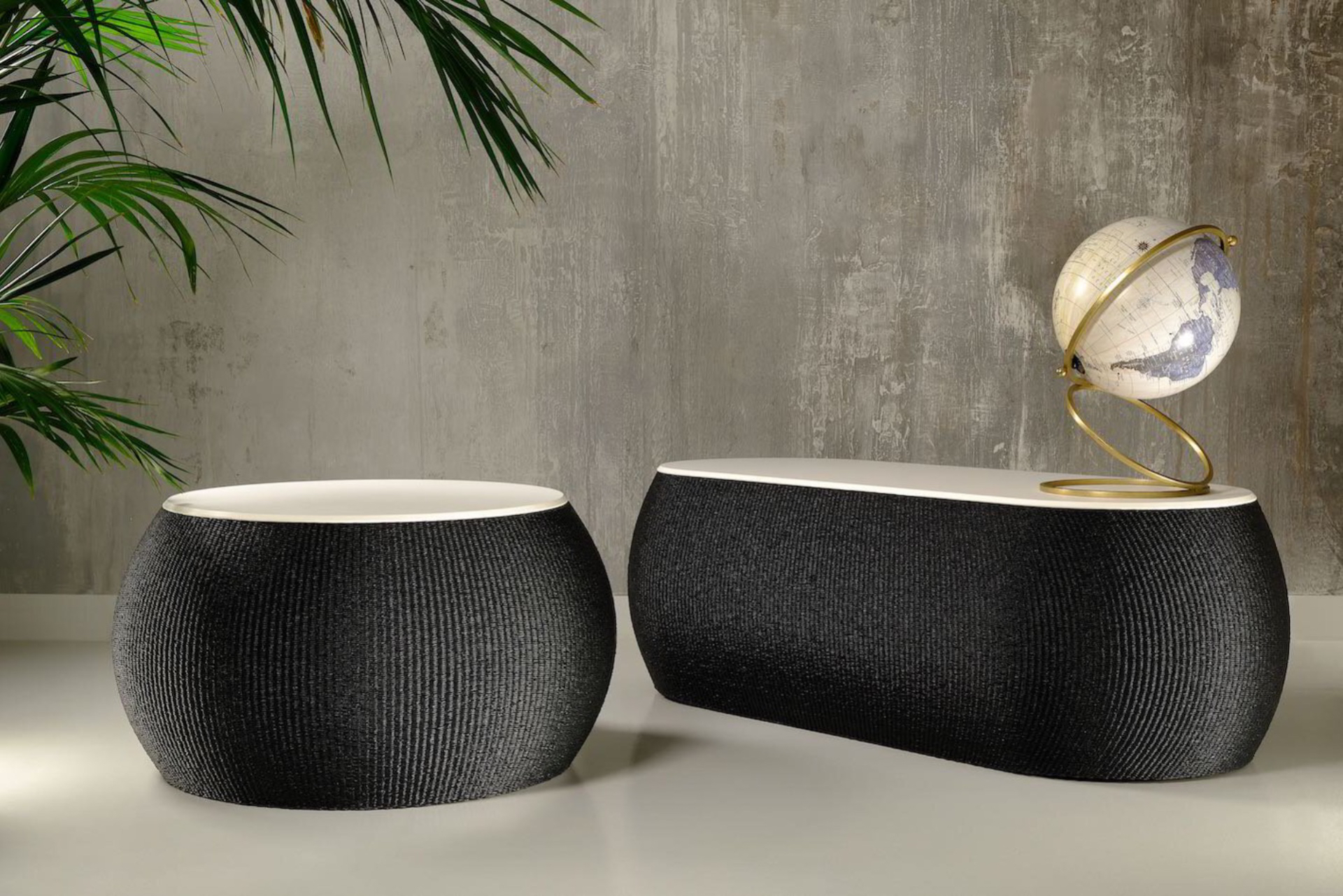
Once upon a time there were crafts workshops. Then came the advent of industrial design and mass production.