

The community magazine for the community
Powered by 
The community magazine for the community
Powered by
© Design Courier. Powered by Medelhan. Developed by Broadweb.80
| CANVAS OF PLANS & DRAWINGS |
INTERIOR & DÉCOR, but with a twist |
| HOTELS & RESTAURANTS, beyond mainstream |
Notes on ART |
| Into big AFFAIRS | INSIDERS |
| GLIMPSES | |
Keywords:
The premise is disarmingly simple: what might “sensible luxury” look like in a market dominated by glass towers and inflated amenity packages? The Bowen answers by resisting spectacle. Instead of another vertical landmark, it builds on an existing structure – a 1925 brick building – doubling its height while preserving its street-level presence. The result is less about skyline impact and more about continuity, an architectural approach that acknowledges the grain of the neighborhood rather than overriding it.
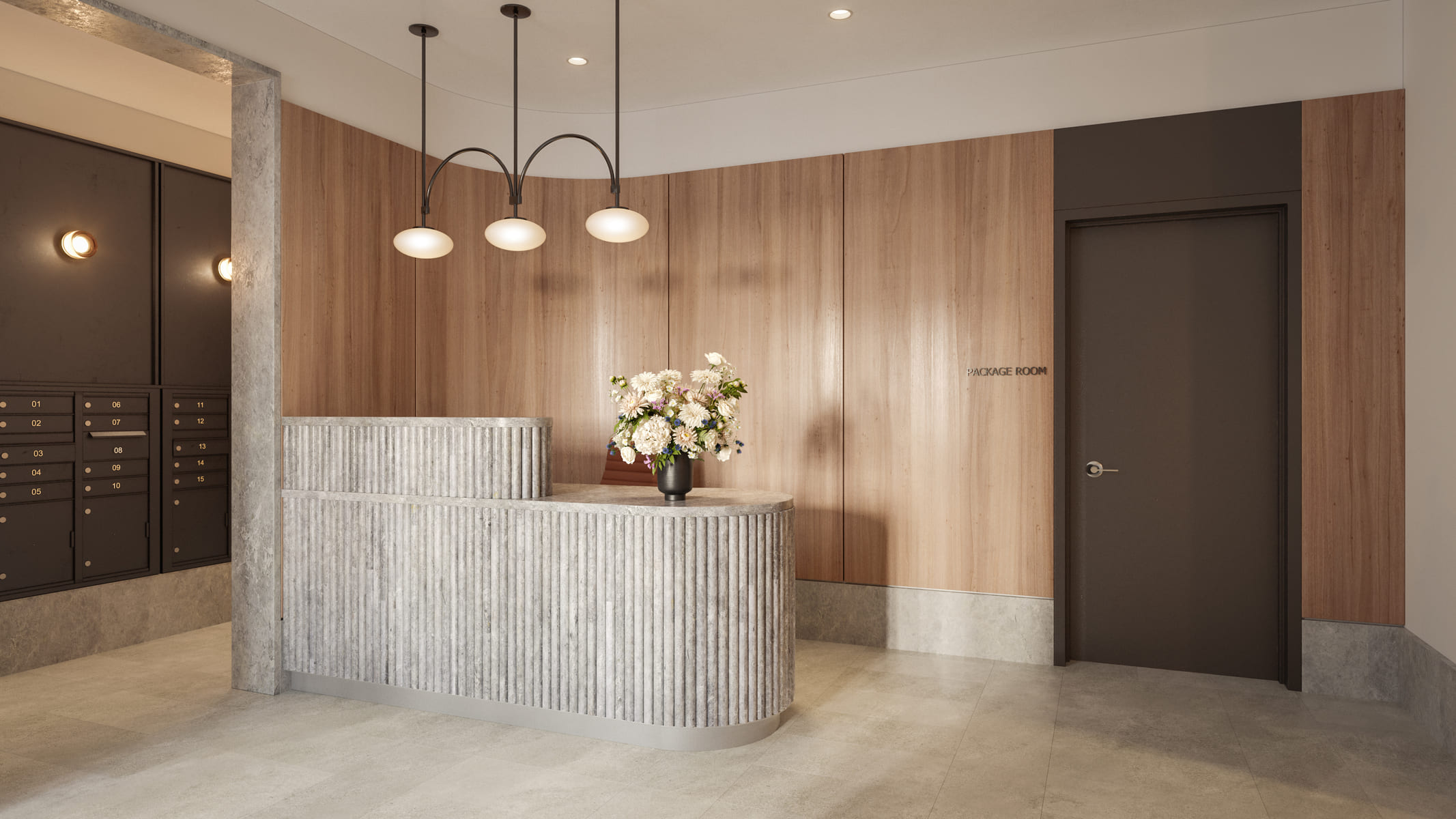
Navigating the merge between pre-war architecture and contemporary interiors required a careful alignment of disciplines. Szandra Toth, founder of CL-OTH, frames it as a matter of tone and layering: “We were really lucky to be able to work with The Bowen’s classic, prewar facade. It set the tone for an elegant design direction. We wanted to celebrate the beautiful original details while adding new layers that bring the building into its new era as a residence. You feel this immediately in the lobby, where the ornate entry transitions into a soft and serene environment that feels quite contemporary yet is naturally grounded in the history of Downtown Brooklyn.” That transition becomes a recurring motif, carried through residences and shared spaces via what she describes as “a soft and clean palette that is subtly layered and nuanced… a cohesive design story.”
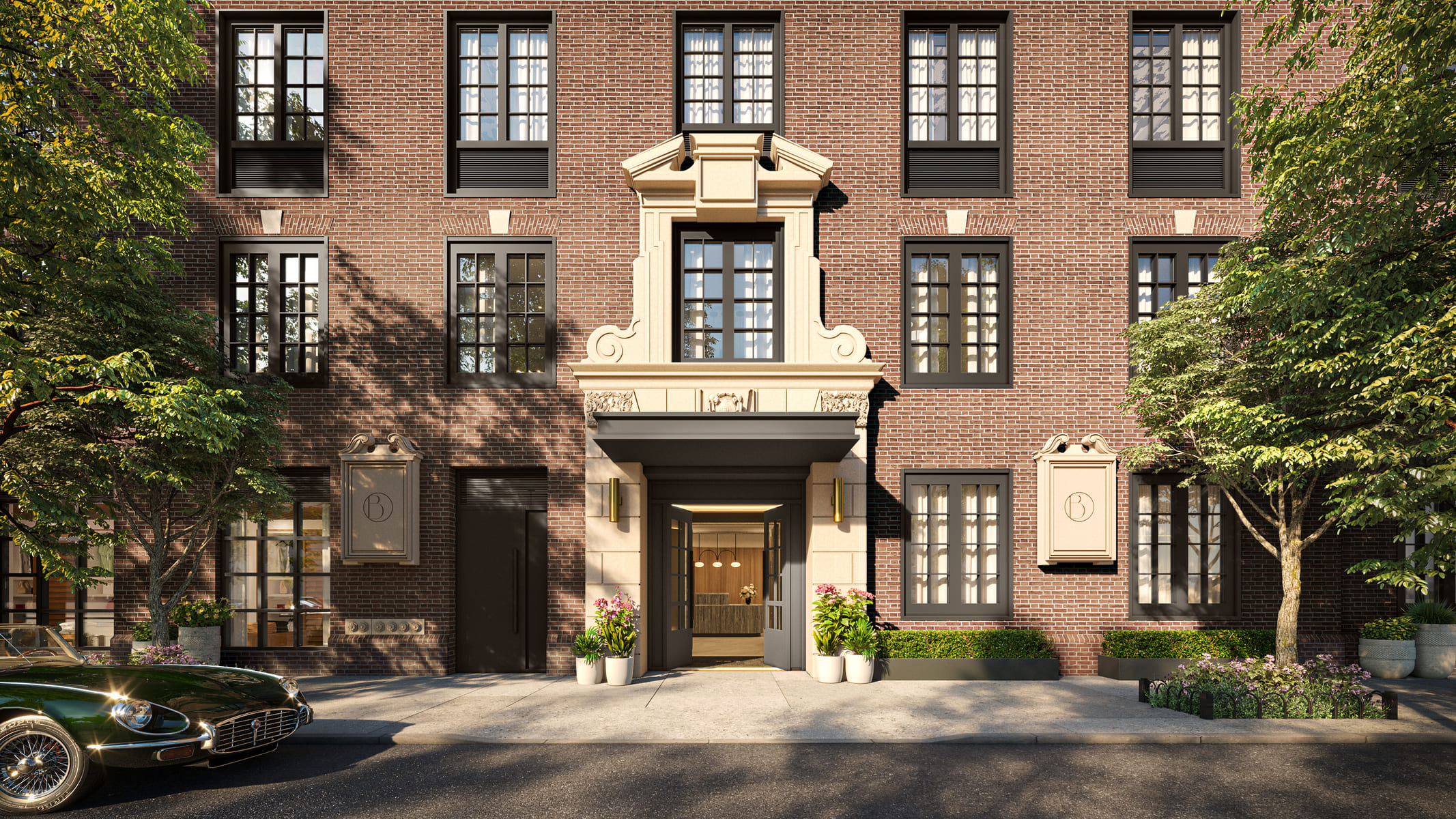
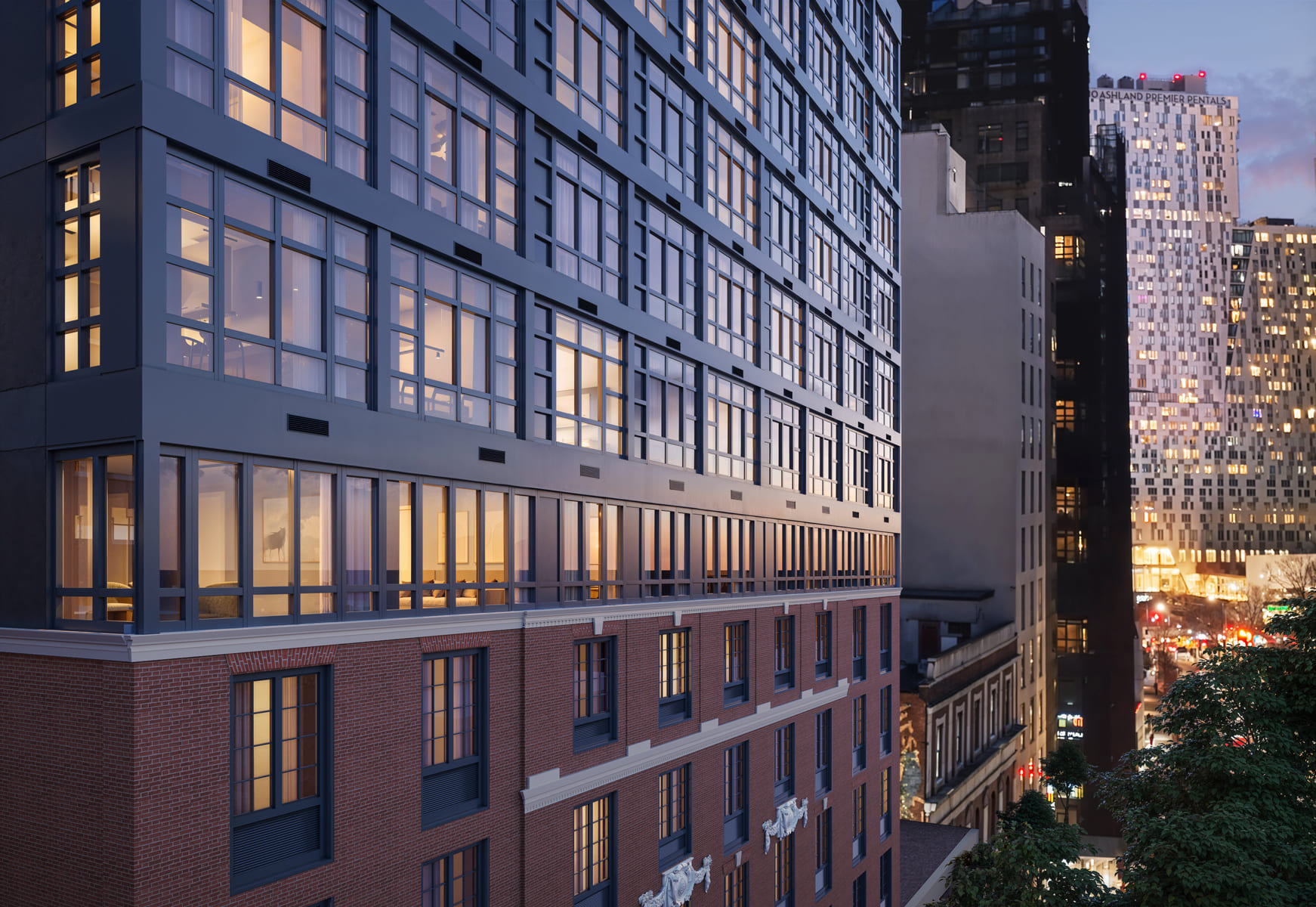
From a development perspective, the project embraces contrast as a generative force. “We worked with GF55 Architects on restoring the stately 1925 building, doubling its height with a modern skyward addition,” explains Ken Browne of Urban Development Partners. “The architecture juxtaposes old and new, and this evolution inspired CL-OTH’s vision for the interiors… to reinterpret classic Brooklyn for modern New Yorkers who have an appreciation for design, innovation and the city.” It is less a seamless blend than a deliberate coexistence.
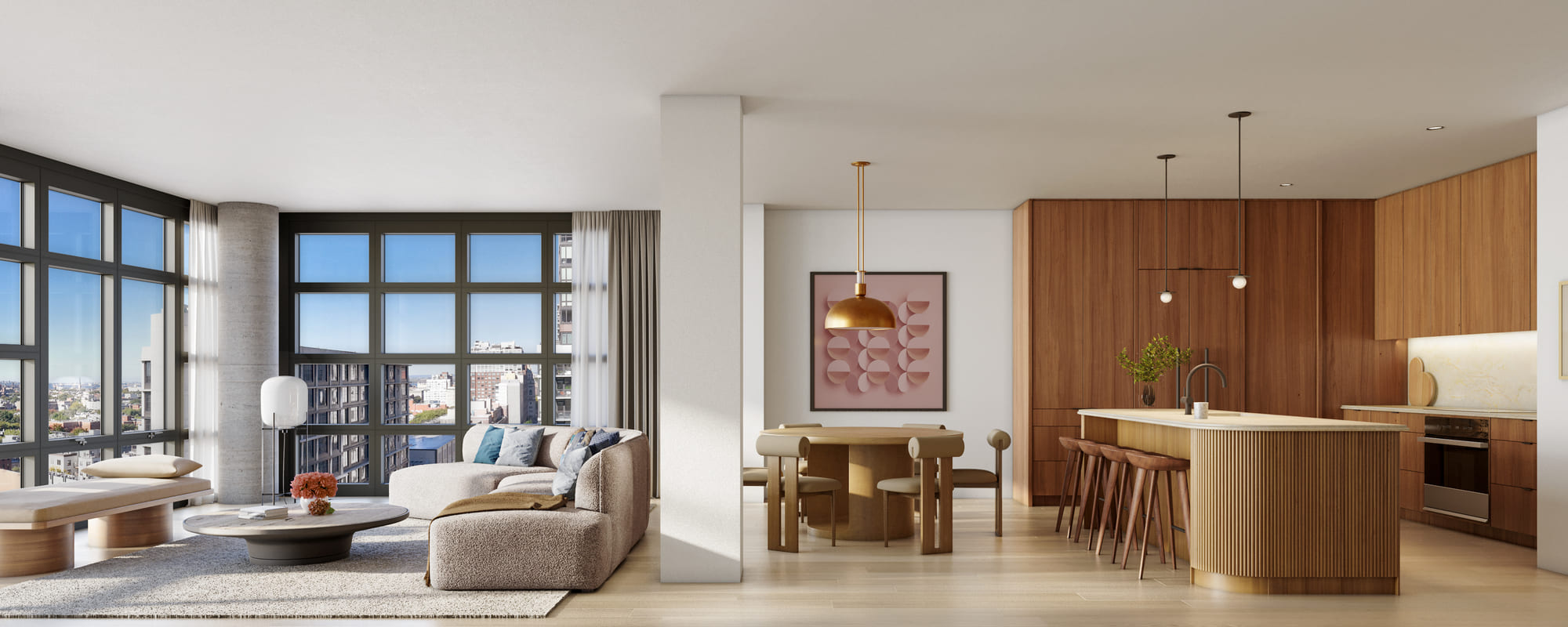
Inside, the apartments reflect a pragmatic understanding of contemporary living. Layouts – ranging from studios to three-bedroom units – prioritize proportion and usability. Storage is generous, circulation is intuitive, and rooms are scaled to accommodate multiple functions without feeling overdetermined. In a city where space is often rigidly defined, The Bowen introduces a degree of ambiguity through its “bonus rooms,” an idea that shifts the emphasis from prescription to possibility.
The decision to leave these spaces open-ended stems from a deliberately personal perspective. “When we first started this project, we envisioned our friends and creative colleagues living in the building,” Toth explains. “We pictured them waking up in the morning, cooking a beautiful dinner, hosting friends, and doing whatever they are passionate about in a space that reflects who they really are… They are a blank canvas – flexible and open to interpretation.” Browne echoes this approach from a broader lens: “We spent a lot of time considering, ‘What does a well-rounded Brooklyn lifestyle actually look like in an apartment?’… The bonus rooms are an important piece of that vision – a blank canvas to express yourself.” In this sense, flexibility becomes a form of luxury in itself.
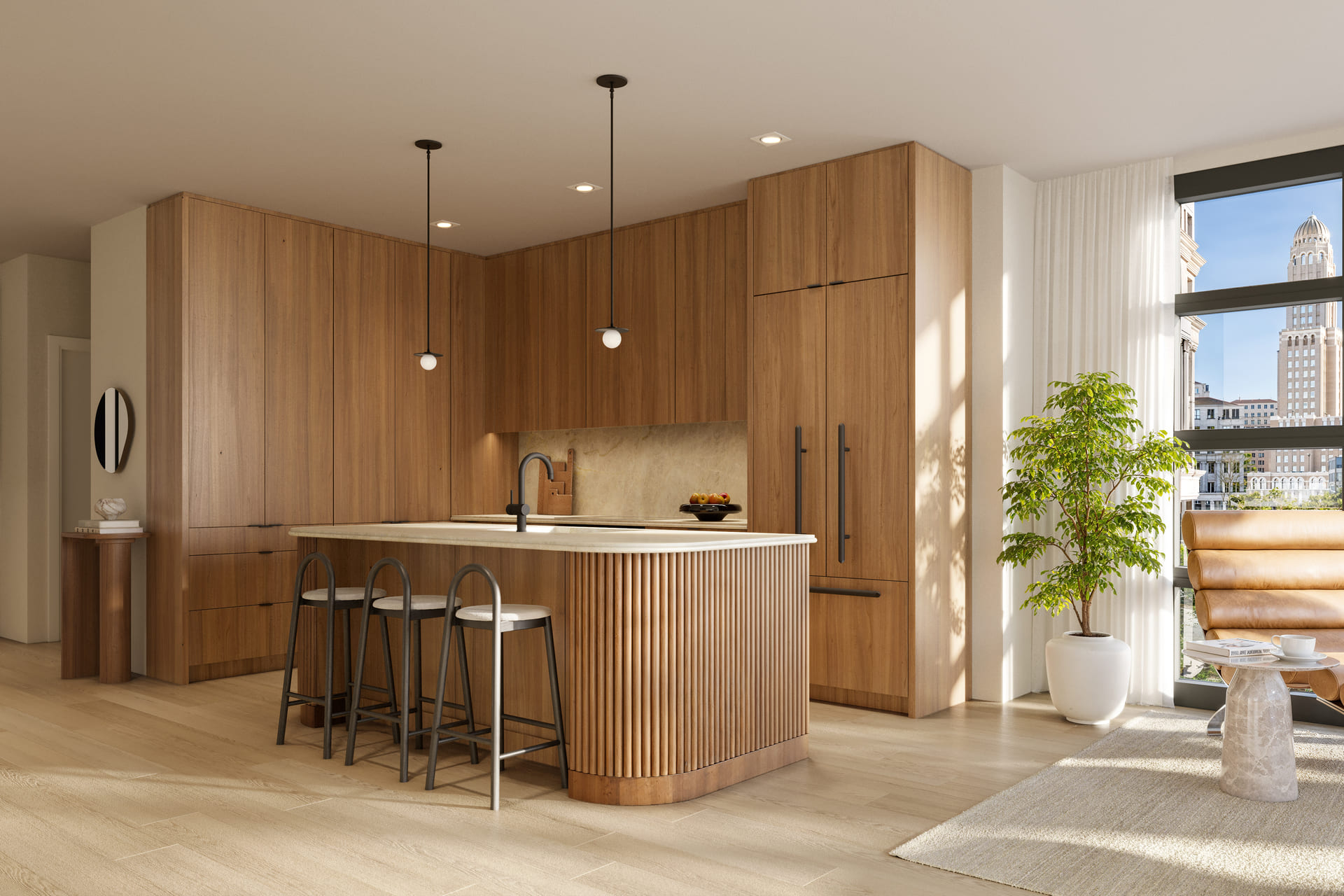
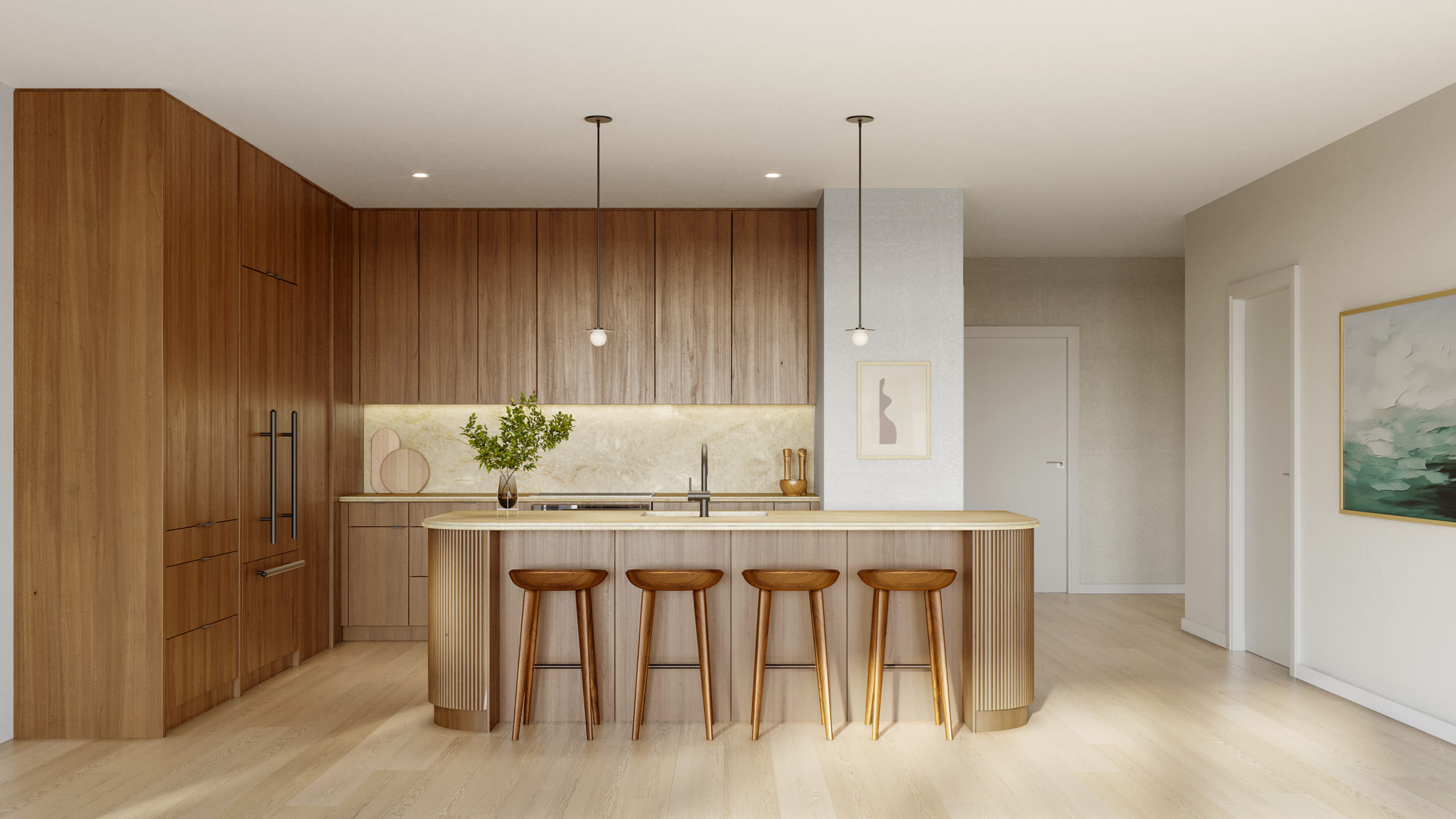
Materiality plays a central role in grounding the interiors. Rather than relying on visual impact alone, the design prioritizes tactile experience and long-term livability. “Warmth comes from materials you actually want to touch every day,” Toth notes. “In the kitchen, walnut millwork gives a soft, hand-crafted feel, while the Taj Mahal stone countertops bring in another natural, almost luminous surface that’s beautiful but also resilient… The panel-front appliances and curved islands… make the whole kitchen read more like a piece of furniture than a row of machines.” Bathrooms follow a similar logic, combining marble, handmade Japanese tile, and matte finishes chosen to age gracefully: “The materials are meant to patina gracefully and not feel precious.”
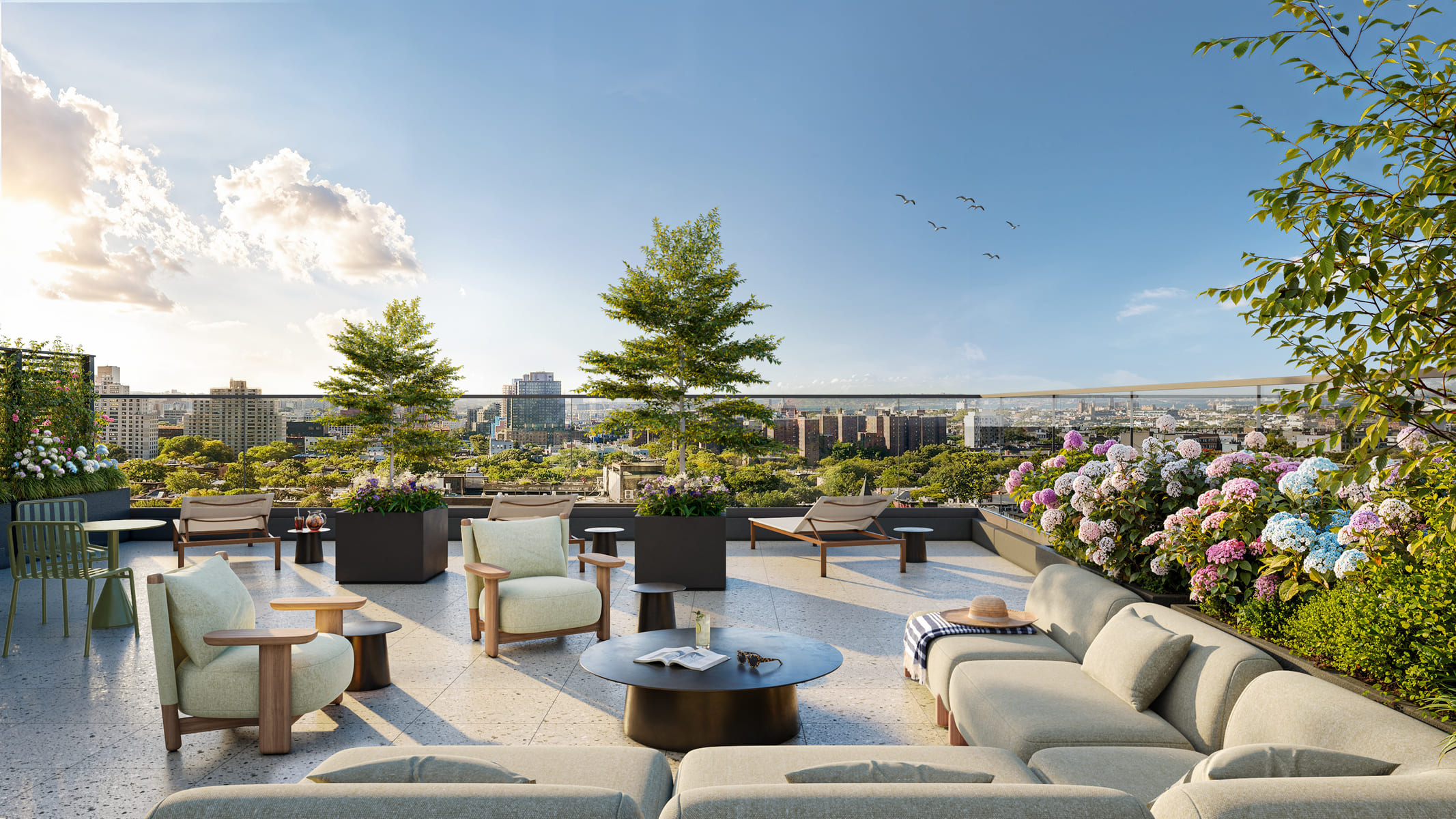
This emphasis on restraint extends beyond private residences into the building’s shared spaces. Designing amenities that foster social interaction without eroding privacy requires a careful spatial choreography. “Open spaces need clear cues to feel both inviting and appropriately private,” Toth explains. “We arranged furniture in small groupings… so they read as little islands where people can sit together but still feel somewhat tucked in.” Enclosed phone booths and adaptable seating introduce further layers of flexibility, allowing residents to shift between collective and individual modes of use.
Interestingly, the project’s more unconventional move lies not in bold gestures but in deliberate restraint. “We wanted the interiors to feel special without overpowering,” Toth reflects. “We wanted the design to be an invitation for owners to layer on their personal aesthetic… We didn’t need to over-style every moment.” In a market that often equates luxury with visual saturation, this approach feels quietly subversive.
The neighborhood itself exerts a strong influence on the building’s character. Downtown Brooklyn’s energy – part cultural hub, part transit nexus—filters into the design in subtle ways. “Downtown Brooklyn has a ‘cool factor’ and we wanted the building to reflect that, but quietly,” says Toth, pointing to details like smoked glass and restrained color accents. Browne situates this within a longer timeline: “This building has been part of Downtown Brooklyn for over 100 years, so we felt a responsibility to honor its history while acknowledging how the area has evolved… inspired by the timeless storefronts and architecture you notice just walking the surrounding blocks.”
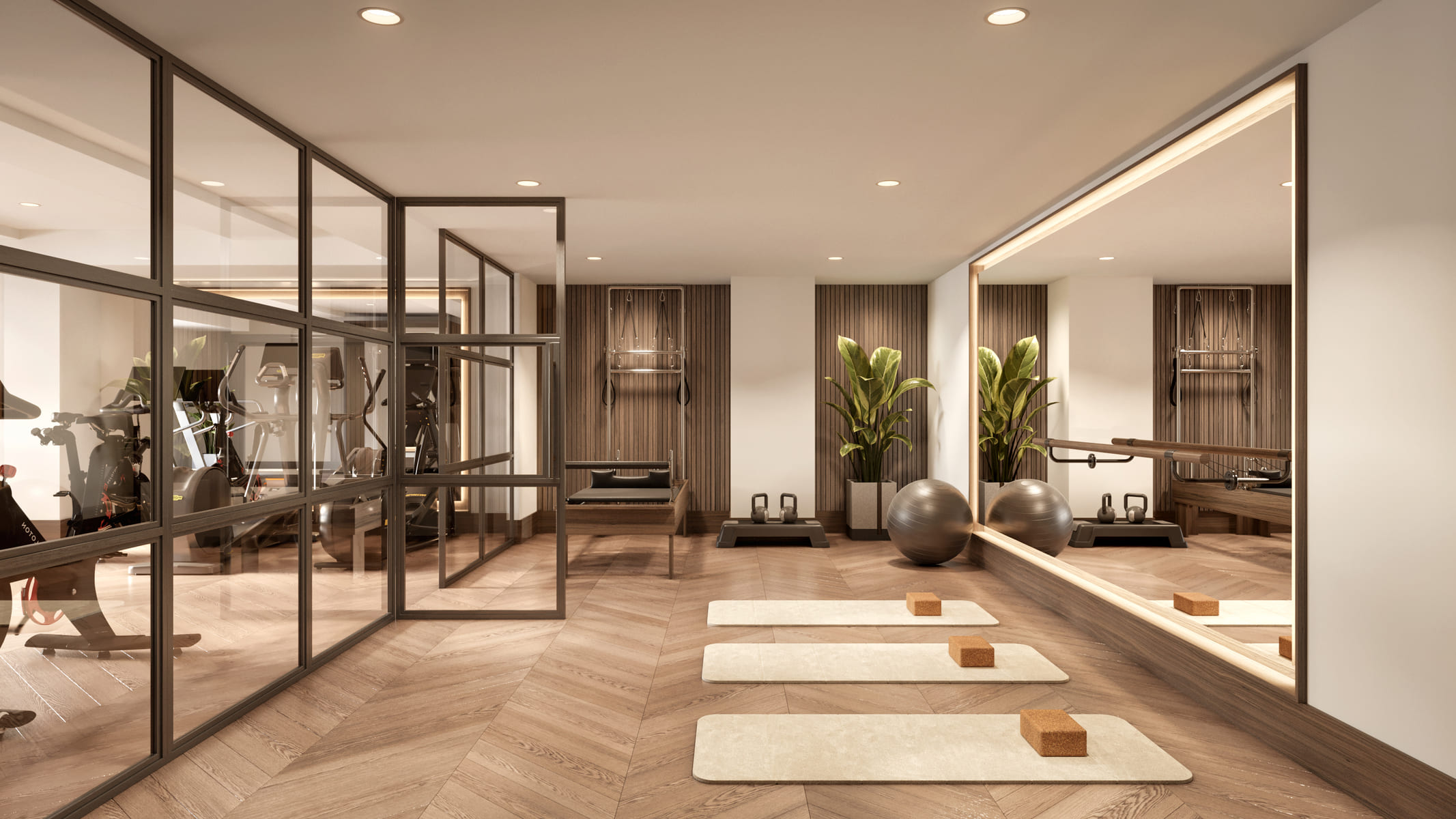
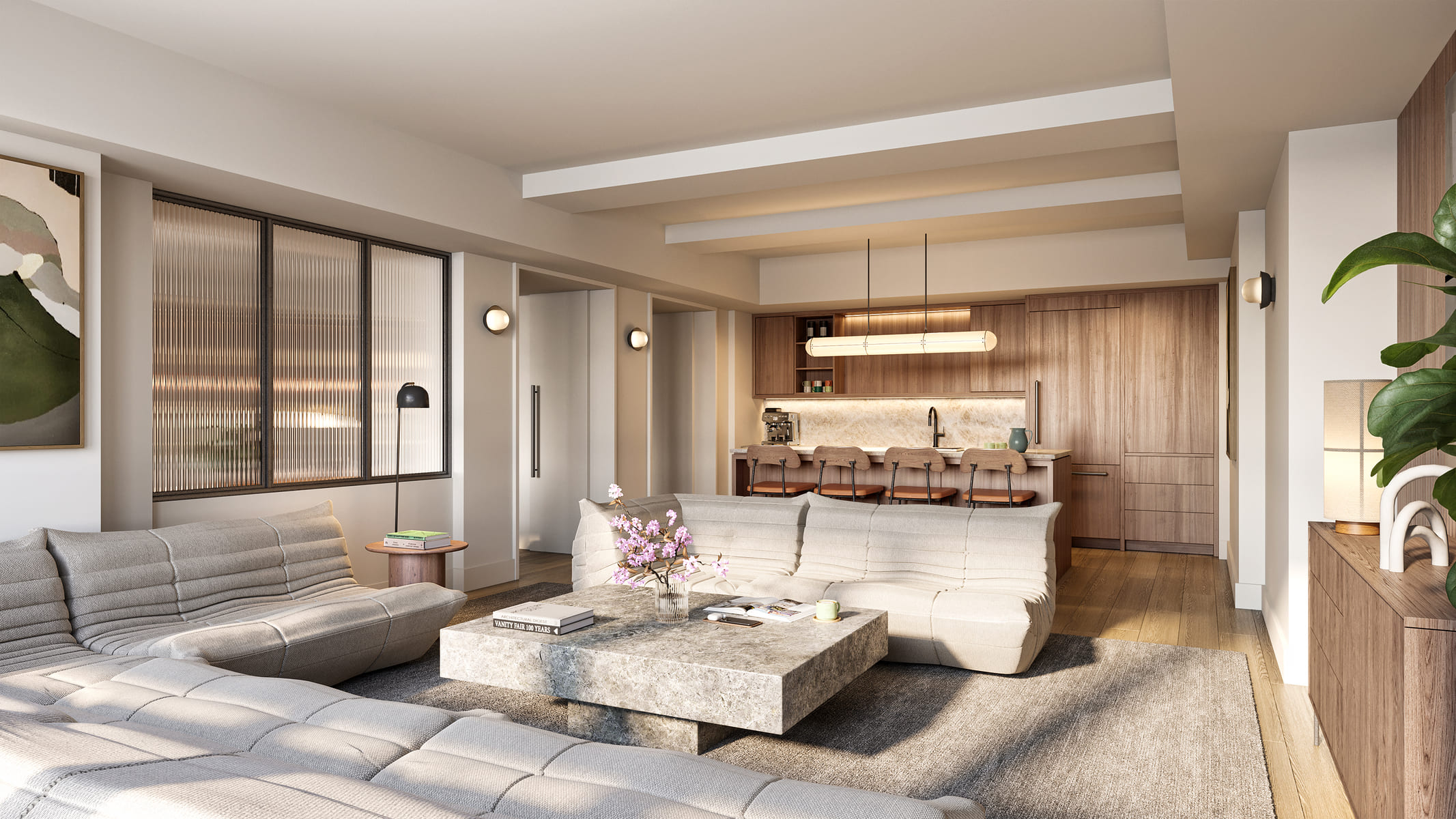
The idea of “sensible luxury” ultimately reveals itself not in singular gestures but in cumulative decisions. “We see it most clearly in the residences themselves,” Toth observes. “Small details make a big difference – like using wood accents on tile edges instead of standard metal strips… panel-front appliances read like furniture.” These are choices that privilege everyday experience over immediate visual impact.
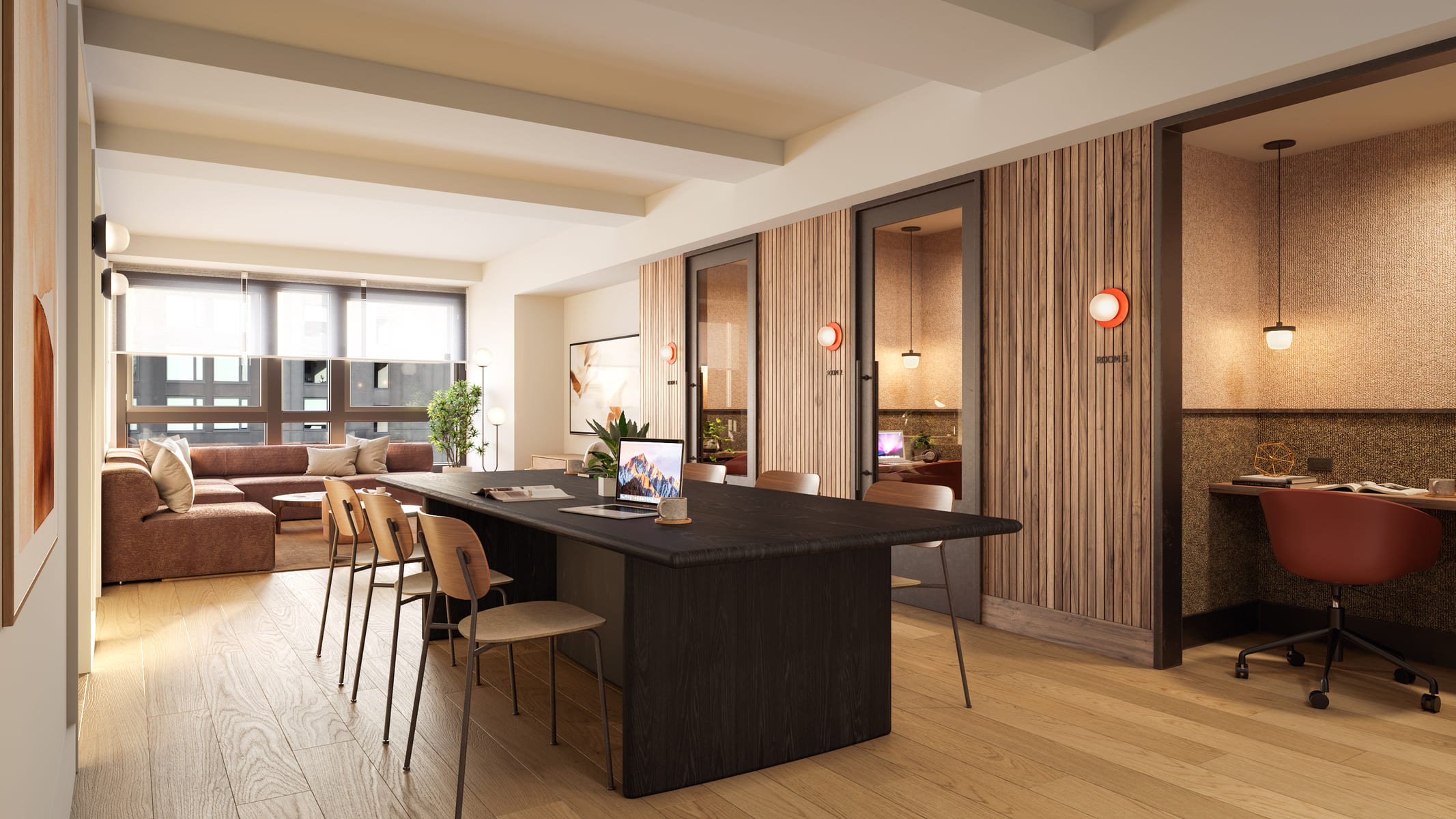
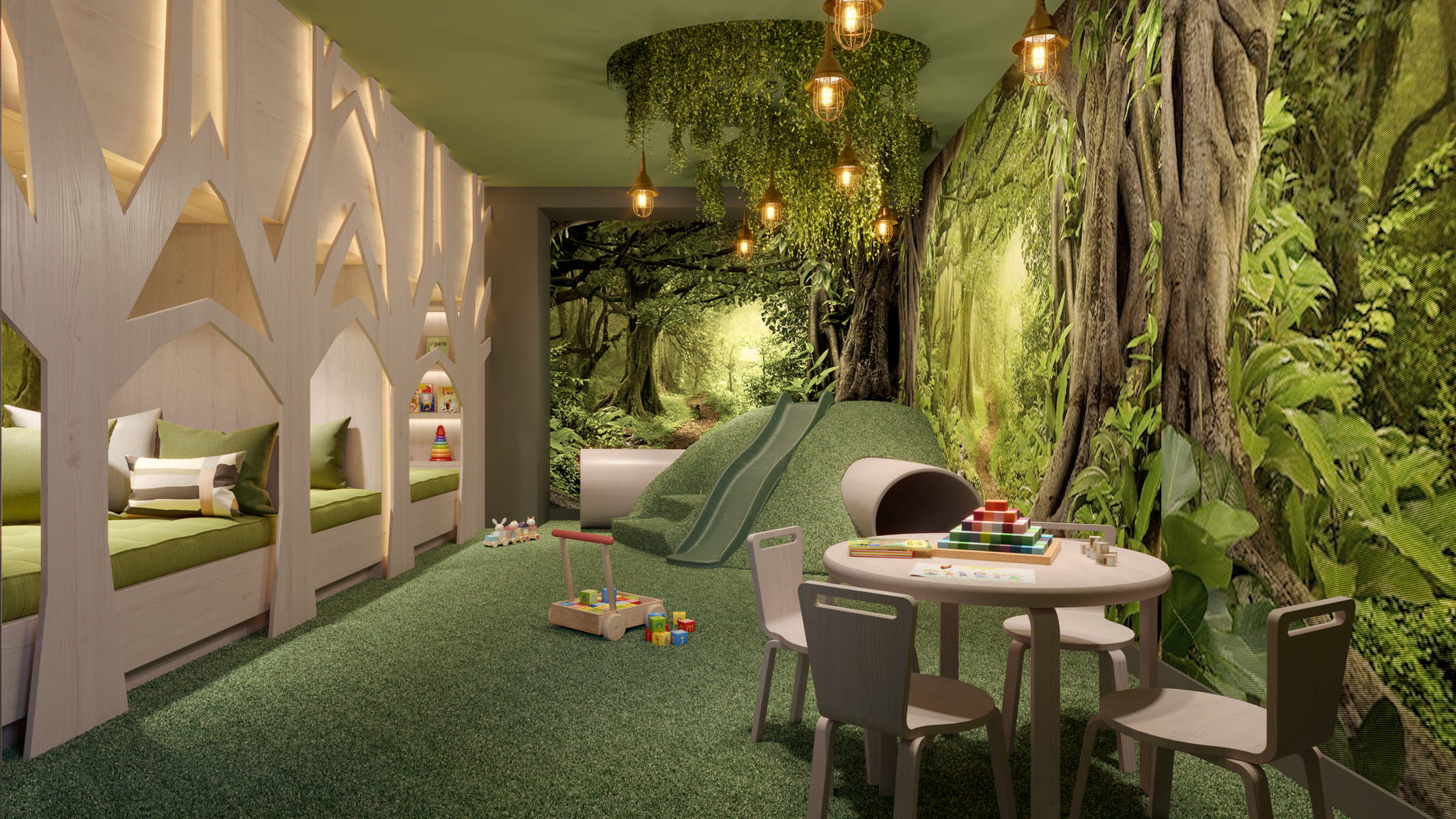
At the threshold between city and home, the building’s ambitions become most legible. “Our approach to balancing city living with personal sanctuary starts in the lobby,” Toth explains. “We wanted the building to feel like a true home from the moment you enter… where the public streetscape disappears into a private environment.” Browne frames this duality in broader urban terms: “The energy here is inspiring and electric. The Bowen is part of this cultural landscape but also offers a calm oasis from it all… a collection of residences and amenities for real New Yorkers to live, work, create, and recharge.”
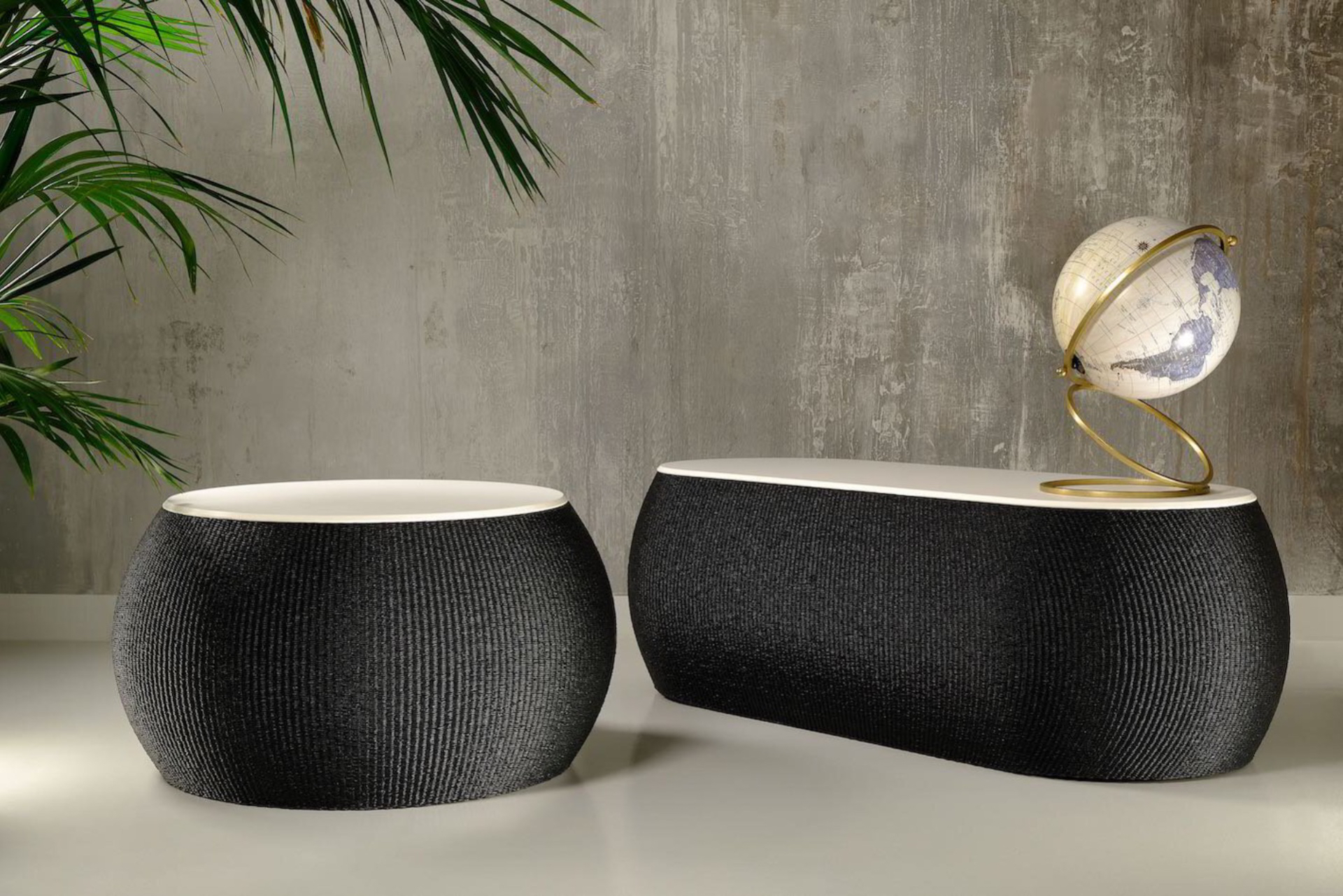
Once upon a time there were crafts workshops. Then came the advent of industrial design and mass production.